Saturday, April 26, 2014

Are the IPCC Recommendations Inefficient?

By Samantha Olson on April 25, 2014 8:27 PM EDT
Economists Believe Climate Change Isn't Treated Efficiently
After reevaluating the global approach to climate change, economists estimate an inefficient plan to decrease future costs. (Photo: report was released by the Intergovernmental Panel on Climate Change (IPCC), is the international body of experts who are organized to evaluate the science related to climate change.


The IPCC's report estimates lower costs of climate change and higher costs of decline, which ultimately means that these efforts should work. However, when the estimates are adjusted for how people will act in reality, economists believe that this is not the case.

The real-world climate policy does not demand an ideal and uniform price for carbon, which according to economists means that the costs of emission reduction will be much higher than the IPCC's estimates.

If we carry heavier costs now than the benefits those costs will provide in the future then that is making us poorer now than we need be. And if we're not willing to bear the costs now that are smaller than the benefits in the future then that makes the future poorer than it need be. This is, absolutely, the standard analysis of this problem, this is the mainstream scientific consensus on this point.

If countries, especially wealthier countries who have more power to change the effect on climate because of emissions and finances, bear more of the burden of cost now than the benefits those costs will provide in the future, there is economic inefficiency.

Current United Nations negotiations focus on stabilizing atmospheric concentrations of greenhouse gases at lower levels than recommended. Economists disagree with lower levels because they are found to be unrealistic and generate feelings of failure when they aren't reached.

"The UN targets are probably never optimal. Using a utility discount rate that is more in line with those observed in public or private investment leads to substantially less stringent climate policy," says Richard S J Tol, co-lead author and professor or Economics, University of Sussex; and professor of the Economics of Climate Change, Vrije Universiteit Amsterdam.

Economists have coined the term "rational expectation" to define when reality is taken into consideration and a plan of action needs to be evaluated. In the case of climate change, the UN's target is too demanding because people don't take the possible severity of future consequences appropriately into account.
Putting aside all discrepancy to whether or not climate change is actually a global phenomenon, many economists view the environment's status as a functioning business.

"Climate change is a result of the greatest market failure the world has seen," Sir Nicholas Stern professor of Economics and Government at the London School of Economics.

Instead of agreeing on what temperature level or level of emissions should be limited, the amount of costs we're willing to afford are regulated. The future temperature consequences rise in an inefficient manner because financial cost is used as the constraint. Economists predict the ramifications will include undeterminable temperature rises.

"The combustion of fossil fuels is most probably the main cause of global warming, which is likely to induce substantial costs on the global economy. There is considerable uncertainty about the strength of these effects, as well as regarding their geographic distribution," says John Hassler, professor of Economics at the Institute for International Economic Studies.

Sunday, April 13, 2014

Open Access/ Tragedy of Commons/Personal Freedom/Coase...


Photos: Showdown in Nevada A 20-year dispute between a Nevada rancher and federal rangers over illegal cattle grazing erupted into an Old West-style showdown on the open range this week, even prompting self-proclaimed members of militia groups from across the country to join the rancher in fighting what they say is U.S. "tyranny."

What began as a legal fight between longtime rancher Cliven Bundy and the U.S. Bureau of Land Management has escalated as Bundy kept his cattle on the federal land, and the government has responded by beginning roundups of the livestock.

A confrontation teetered on violence Wednesday when Bundy family members and dozens of supporters angrily confronted a group of rangers holding Tasers and barking dogs on leashes near Bunkerville, about 80 miles northeast of Las Vegas.

Federal officials say a police dog was kicked and officers were assaulted.
Photos: Showdown in Nevada

Bundy family members say they were thrown to the ground or jolted with a Taser.
In the end, the rangers got into their white SUVs and drove away, a YouTube video of the incident showed.
"Get out of our state!" the cheering protesters yelled at the rangers as they departed in several vehicles. "BLM go away! BLM go away!" they added, referring to the Bureau of Land Management.

The entire incident is now under investigation, Amy Lueders, the bureau's director in Nevada, said Thursday.
To some, the 67-year-old Bundy is a hero who hails from a long family of ranchers stretching back to the Wild West.

To environmentalists and the feds, however, he's an outlaw of sorts who owes U.S. taxpayers more than $1 million in unpaid grazing fees.

The U.S. government is rounding up Bundy's cattle that it says have been grazing illegally on public lands in Clark County for more than 20 years, according to the land-management bureau and the National Park Service.

Between Saturday and Wednesday, contracted wranglers impounded a total of 352 cattle, federal officials said. Bundy says he owns 500 of the more than 900 cattle that federal officials are planning to confiscate for illegal grazing, the Las Vegas Review-Journal reported. Bundy told the newspaper that each head of his livestock is worth about $1,000.

Since the roundups began, protesters have been confined to two areas to publicly declare their grievances, but the peaceful protests in recent days "have crossed into illegal activity, including blocking vehicles associated with the (roundup), impeding cattle movement, and making direct and overt threats to government employees," the two federal agencies said in a statement.

On Wednesday, a bureau truck driven by a civilian employee assisting in the roundup "was struck by a protester on an ATV and the truck's exit from the area was blocked by a group of individuals who gathered around the vehicle," the agencies' statement said.

In the scuffle with protesters, a police dog was kicked, and officers protecting the civilian driver were threatened and assaulted, the two agencies' statement said. "After multiple requests and ample verbal warnings, law enforcement officers deployed Tasers on a protestor," the statement said.

The profanity-laced tussle was captured on a video posted on YouTube. A group that said it posted the video didn't respond to requests for comment.

In the video, protesters demanded to know why a backhoe and a dump truck were being used in the roundup -- and whether any livestock were killed. On Thursday, Lueders said the heavy equipment was used for field restoration.

"No BLM! No BLM!" the protesters chanted to rangers in the middle of a two-lane rural highway.

What sounds likes zapping Tasers can be heard in the video.

In the wake of the publicized protests, members of various militia groups have been traveling from Virginia, Texas, Montana, Idaho and Wisconsin and arriving at the protest site and Bundy's ranch to support the family, said Stephen L. Dean, 45, of Utah, a member of one such group called the Peoples United Mobile Armed Services.

"It's tyranny in government," Dean said when asked what brought him to Nevada.
And, he added, "stealing people's cattle."

One banner at the protest side stated: "Has the West been won? Or has the fight just begun!"
In removing Bundy's livestock from public lands, the park service and land bureau are carrying out two U.S. District Court orders from two different judges.

"Cattle have been grazing in trespass on public lands in Southern Nevada for more than two decades," the National Park Service said. "The BLM and NPS have made repeated attempts to resolve this matter administratively and judicially. Impoundment of cattle illegally grazing on public lands is an option of last resort."

Added the BLM: "Mr. Bundy has also failed to comply with multiple court orders to remove his cattle from the federal lands and to end the illegal trespass."

The bureau does allow grazing on federal lands -- it administers 18,000 grazing permits and leases on 157 million acres across the country, the agency said.

Bundy's dispute with the government began about 1993 when the bureau changed grazing rules for the 600,000-acre Gold Butte area to protect an endangered desert tortoise, KLAS reported.
Bundy refused to abide by the changes and stopped paying his grazing fees to the federal bureau, which he contends is infringing on state rights. His family has been ranching since the 1800s, before the U.S. Department of Interior was created and endangered species became a federal issue, he said in an interview with KLAS.

"My forefathers have been up and down the Virgin Valley ever since 1877. All these rights I claim have been created through pre-emptive rights and beneficial use of the forage and the water. I have been here longer. My rights are before the BLM even existed," Bundy told the station.

"With all these rangers and all this force that is out here, they are only after one man right now. They are after Cliven Bundy. Whether they want to incarcerate me or whether they want to shoot me in the back, they are after me. But that is not all that is at stake here. Your liberty and freedom is at stake," he continued.
And Bundy sees it as a state issue.

"The federal government has seized Nevada's sovereignty ... they have seized Nevada's laws and our public land. We have no access to our public land and that is only a little bit of it," he said.

This week, Nevada Gov. Brian Sandoval told the bureau of residents' criticism of the roundup.

What Sandoval said he found "most disturbing" was the BLM's use of a "First Amendment area" that confined protesters to a designated area.

Such an area "tramples upon Nevadans' fundamental rights under the U.S. Constitution," Sandoval said. "No cow justifies the atmosphere of intimidation which currently exists nor the limitation of constitutional rights that are sacred to all Nevadans."
 
In response, federal officials are allowing the protesters to gather on public lands as long as they don't impede the roundup, said Lueders, the BLM's director in Nevada.

Bundy is digging in for a long fight.

"I've been fighting this for a number of years. It's not about my cows, I'll tell you that much," he said at a town meeting on Wednesday night. "It's about freedom and liberty and our Constitution ... and above all it's about our policing power. Who has policing power today?"

With the growing controversy, it was uncertain Thursday how long the cattle roundup will now last. At Wednesday night's meeting, residents gave Bundy a standing ovation when he publicly spoke.

"I love you people. And I love this land, and I love freedom and liberty," Bundy told the crowd. "I know without doubt that our Constitution didn't provide for anything like the federal government owning this land, and so when I pay my grazing fees -- if I owe any grazing fees -- I will sure pay it to the right landlord, and that will be to Clark County, Nevada."

Sunday, April 06, 2014

IPCC sounds the alarm again. Is anyone listening?


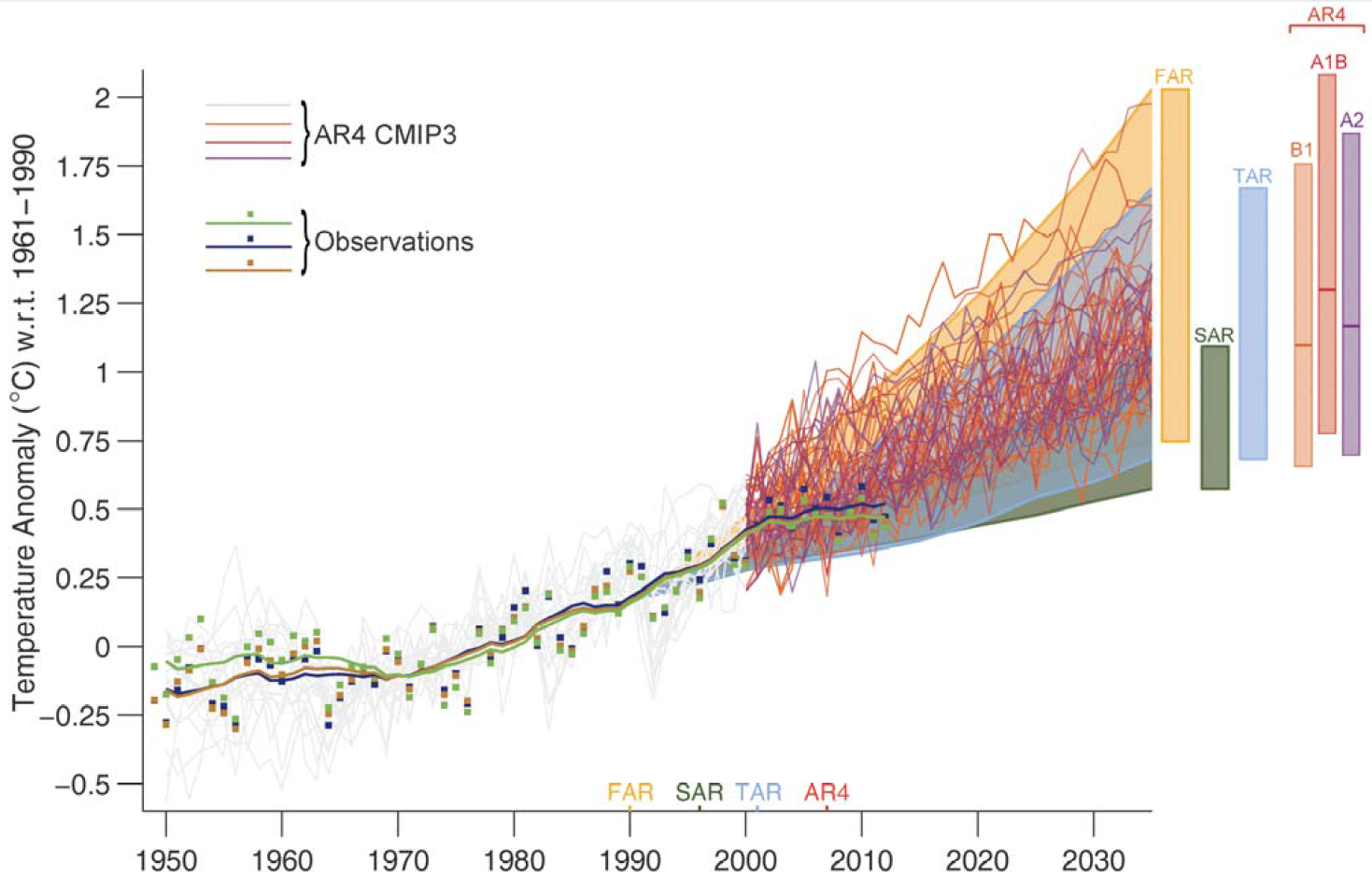
The Intergovernmental Panel on Climate Change has released its latest report on the impacts of global warming, projected changes under various scenarios for greenhouse gas emissions and options for limiting related risks. Justin Gillis, reporting from the meeting in Yokohama, Japan, where government officials from around the world signed off on the summary document over the weekend, has summarized the prime conclusions and statements of panel leaders.
You can watch video of officials’ and authors’ comments here.
Here are the main bullet points from the summary on impacts of the changing climate that have already been detected (it’s important to note that the panel stresses it is not, in this section, assessing how much of the change is human-driven or the result of natural variability):
In recent decades, changes in climate have caused impacts on natural and human systems on all continents and across the oceans. Evidence of climate-change impacts is strongest and most comprehensive for natural systems. Some impacts on human systems have also been attributed to climate change, with a major or minor contribution of climate change distinguishable from other influences.
In many regions, changing precipitation or melting snow and ice are altering hydrological systems, affecting water resources in terms of quantity and quality (medium confidence). Glaciers continue to shrink almost worldwide due to climate change (high confidence), affecting runoff and water resources downstream (medium confidence). Climate change is causing permafrost warming and thawing in high-latitude regions and in high-elevation regions (high confidence).
Many terrestrial, freshwater, and marine species have shifted their geographic ranges, seasonal activities, migration patterns, abundances, and species interactions in response to ongoing climate change (high confidence)…. While only a few recent species extinctions have been attributed as yet to climate change (high confidence), natural global climate change at rates slower than current anthropogenic climate change caused significant ecosystem shifts and species extinctions during the past millions of years (high confidence).
Based on many studies covering a wide range of regions and crops, negative impacts of climate change on crop yields have been more common than positive impacts (high confidence). The smaller number of studies showing positive impacts relate mainly to highlatitude regions, though it is not yet clear whether the balance of impacts has been negative or positive in these regions (high confidence). Climate change has negatively affected wheat and maize yields for many regions and in the global aggregate (medium confidence). Effects on rice and soybean yield have been smaller in major production regions and globally, with a median change of zero across all available data, which are fewer for soy compared to the other crops….
Observed impacts relate mainly to production aspects of food security rather than access or other components of food security…. Since AR4, several periods of rapid food and cereal price increases following climate extremes in key producing regions indicate a sensitivity of current markets to climate extremes among other factors (medium confidence).
At present the worldwide burden of human ill-health from climate change is relatively small compared with effects of other stressors and is not well quantified. However, there has been increased heat-related mortality and decreased cold-related mortality in some regions as a result of warming (medium confidence). Local changes in temperature and rainfall have altered the distribution of some water-borne illnesses and disease vectors (medium confidence). Differences in vulnerability and exposure arise from non-climatic factors and from multidimensional inequalities often produced by uneven development processes (very high confidence). These differences shape differential risks from climate change…. People who are socially, economically, culturally, politically, institutionally, or otherwise marginalized are especially vulnerable to climate change and also to some adaptation and mitigation responses (medium evidence, high agreement). This heightened vulnerability is rarely due to a single cause. Rather, it is the product of intersecting social processes that result in inequalities in socioeconomic status and income, as well as in exposure. Such social processes include, for example, discrimination on the basis of gender, class, ethnicity, age, and (dis)ability.
Impacts from recent climate-related extremes, such as heat waves, droughts, floods, cyclones, and wildfires, reveal significant vulnerability and exposure of some ecosystems and many human systems to current climate variability (very high confidence). Impacts of such climate-related extremes include alteration of ecosystems, disruption of food production and water supply, damage to infrastructure and settlements, morbidity and mortality, and consequences for mental health and human well-being. For countries at all levels of development, these impacts are consistent with a significant lack of preparedness for current climate variability in some sectors.
Climate-related hazards exacerbate other stressors, often with negative outcomes for livelihoods, especially for people living in poverty (high confidence). Climate-related hazards affect poor people’s lives directly through impacts on livelihoods, reductions in crop yields, or destruction of homes and indirectly through, for example, increased food prices and food insecurity. Observed positive effects for poor and marginalized people, which are limited and often indirect, include examples such as diversification of social networks and of agricultural practices.
Violent conflict increases vulnerability to climate change (medium evidence, high agreement). Large-scale violent conflict harms assets that facilitate adaptation, including infrastructure, institutions, natural resources, social capital, and livelihood opportunities.

Economic sectors
For most economic sectors, the impacts of drivers such as changes in population, age structure, income, technology, relative prices, lifestyle, regulation, and governance are projected to be large relative to the impacts of climate change (medium evidence, high agreement). Climate change is projected to reduce energy demand for heating and increase energy demand for cooling in the residential and commercial sectors (robust evidence, high agreement). Climate change is projected to affect energy sources and technologies differently, depending on resources (e.g., water flow, wind, insolation), technological processes (e.g., cooling), or locations (e.g., coastal regions, floodplains) involved. More severe and/or frequent extreme weather events and/or hazard types are projected to increase losses and loss variability in various regions and challenge insurance systems to offer affordable coverage while raising more risk-based capital, particularly in developing countries. Large-scale public-private risk reduction initiatives and economic diversification are examples of adaptation actions.
Global economic impacts from climate change are difficult to estimate. Economic impact estimates completed over the past 20 years vary in their coverage of subsets of economic sectors and depend on a large number of assumptions, many of which are disputable, and many estimates do not account for catastrophic changes, tipping points, and many other factors. With these recognized limitations, the incomplete estimates of global annual economic losses for additional temperature increases of ~2°C are between 0.2 and 2.0% of income (±1 standard deviation around the mean) (medium evidence, medium agreement). Losses are more likely than not to be greater, rather than smaller, than this range (limited evidence, high agreement). Additionally, there are large differences between and within countries. Losses accelerate with greater warming (limited evidence, high agreement), but few quantitative estimates have been completed for additional warming around 3°C or above. Estimates of the incremental economic impact of emitting carbon dioxide lie between a few dollars and several hundreds of dollars per tonne of carbon (robust evidence, medium agreement). Estimates vary strongly with the assumed damage function and discount rate.

Livelihoods and poverty
Throughout the 21st century, climate-change impacts are projected to slow down economic growth, make poverty reduction more difficult, further erode food security, and prolong existing and create new poverty traps, the latter particularly in urban areas and emerging hotspots of hunger (medium confidence). Climate-change impacts are expected to exacerbate poverty in most developing countries and create new poverty pockets in countries with increasing inequality, in both developed and developing countries. In urban and rural areas, wage-labor-dependent poor households that are net buyers of food are expected to be particularly affected due to food price increases, including in regions with high food insecurity and high inequality (particularly in Africa), although the agricultural self-employed could benefit. Insurance programs, social protection measures, and disaster risk management may enhance long-term livelihood resilience among poor and marginalized people, if policies address poverty and multidimensional inequalities.
There is much, much more, of course.(DOT Earth)

Saturday, March 22, 2014

Is There a Carbob Bubble?


The following is a short report that is expected in a week or so from Exxon Mobil about the risk of a "Carbon Bubble", the simple idea that if 80% of the fossil reserves is not to be used then the world is very highly over invested in Carbon.

***************************************************************************************


Exxon Mobil Corp. has agreed to study the risk to its business if the world were to take aggressive action on climate change.

Under a deal reached with activist shareholders yesterday, the company will release a report this month on "carbon asset risk" -- the chance that market forces or policy changes will render some of its product unsellable.

As Exxon Mobil is the world's largest public oil and gas firm, the move is easily the most significant industry acknowledgement of the "carbon bubble."

"To be proactive and respond with a report shows that they're willing to provide transparency to investors, explain the kind of scenario planning they're doing, and let investors decide if they think Exxon is at great risk," said Natasha Lamb, director of equity research and shareholder engagement at Arjuna Capital and a co-leader of the pressure campaign.

Arjuna, a sustainability-focused investing firm, and As You Sow, a nonprofit, filed a shareholder resolution asking for the report in December. That put it on track to be voted on by Exxon Mobil shareholders at the company's annual meeting this spring.

According to Lamb, Exxon Mobil asked the Securities and Exchange Commission to exclude the proposal, saying it was redundant with another shareholder effort on greenhouse gases.
But as the activists and Exxon Mobil approached a deal, Arjuna and As You Sow withdrew their proposal, and Exxon Mobil agreed to do the analysis.

"I don't think that Exxon wanted to have a carbon asset risk proposal on the ballot," Lamb said. "It's a huge black mark, especially considering the [350.org] campaign and the divestment movement, and just highlights that they're not addressing it."

A spokesman for Exxon Mobil would not comment. However, correspondence with company officials, shared with EnergyWire by the investor groups, shows the company agreeing to do the report if the activists relented.

That may be the most recent development, but Exxon Mobil was likely engaging the "carbon bubble" issue as far back as last fall.

Bennett Freeman, senior vice president for sustainability research and policy at Calvert Investments, said the issue came up in a November meeting with the company.

Freeman said the fact that the company is studying the issue doesn't force it to come to any particular conclusion. To him, the move is simply in keeping with the firm's watchful ways.

"This is a company which, whatever else one thinks about them, is very well-managed and is very sensitive to a variety of sources of risk, environmental as well as social," he said. "Stranded assets -- there could be no more fundamental potential risk for them."

Andrew Logan, oil and gas director at Ceres, said Exxon Mobil may have noticed the "carbon bubble" concept gaining cachet among investors, Wall Street analysts and statistical agencies like the International Energy Agency.

But beyond that, he said, the company may want to fend off criticisms that it's been too conservative with investments -- unlike peers, such as Chevron Corp., that have been willing to grow production even if it comes at a higher cost.

"I also think the company believes it has a good story to tell," Logan said by email. "If the Carbon Asset Risk scenario plays out as we fear, at least in the near term XOM's approach could be vindicated."

Breaking the 'carbon bubble'

The supermajor's move represents a significant win for environmentally minded investors. While the idea of the "carbon bubble" has been discussed since 2012, shareholder initiatives on environment can sometimes take many years.

Victory is often measured just by getting a company to allow a vote, getting its acknowledgment of the issue or winning a few more percentage points of shareholder votes.

The "carbon bubble" made its mainstream debut in a Rolling Stone article, penned by climate activist Bill McKibben, published in 2012. It was based on an unorthodox U.K. research group's argument that 80 percent of the world's oil, gas and coal reserves had to remain "stranded" for the goal of limiting global warming to 2 degrees Celsius to be possible.

Over 2012 and 2013, the concept was explored by a few analysts from major Wall Street institutions. Meanwhile, the concept of divestment, urged on by McKibben and the group 350.org, began to spring up new movements at universities.

Then, last October, 70 investors with $3 trillion in assets launched a coordinated effort, through Ceres. It targeted 45 major fossil-fuel and power companies, including Exxon Mobil.

It was probably the combination of all these developments, investor activists say, that turned up the heat on Exxon Mobil.

Break it down

When Exxon Mobil releases the report, it may contain some of the most nuanced information on carbon intensity to date.

Analysts have lamented the lack of granular data on companies' oil and gas reserves. Conventional oil, oil sands, deepwater drilling and shale gas all have different carbon profiles, making these data essential for modeling a company's unique risk profile.

Danielle Fugere, president of As You Sow, said Exxon Mobil has agreed to break down its resource base by type and location.

Under the agreement, Exxon Mobil also will offer other analyses. Among them: how it justifies capital investments in new reserves, whether capital investments are sound under a carbon policy, and whether it's ready if global energy demand is different than forecast.

"They believe they are less climate-intensive in some of their production processes, so we're hopeful they'll talk about that," Fugere said. "My guess is they're going to say they're prepared for a carbon-constrained world, and they're better prepared than other companies."

Action in Europe

Meanwhile, a European group of oil and gas firms is preparing its own position on the carbon bubble -- with similar questions about what that position will actually be.

The London-based group IPIECA, which counts Exxon Mobil, Saudi Aramco, Chevron and other oil heavyweights in its ranks, is working on a fact sheet on the issue of "stranded assets" for release in the next few months.

IPIECA calls itself "the industry's principal channel of communication with the United Nations." But as a trade association, it has no binding power over its members. The group is best known for studying individual technical issues -- under the guidance of a steering committee of oil-company executives -- and issuing them as benchmarks or best practices.

"It simply seeks to explain the theories around a carbon bubble, and explore some of the assumptions necessary to underpin them," Helen Murphy, a spokeswoman for the group, said by email. "It concludes by confirming that our industry has always managed oil price and carbon risks and continues to do so via a number of approaches."

Sunday, March 02, 2014

Floating Wind Turbines


A floating offshore wind turbine built by Maine Aqua Ventus
Courtesy of University of Maine
A floating offshore wind turbine built by Maine Aqua Ventus

(Is the energy output from such an undertaking free and is it clean?)

There’s roughly enough wind off the West Coast to power all of the U.S. Alla Weinstein is determined to harness as much of it as she can. Weinstein is chief executive officer of Principle Power, a Seattle company that has developed a ballast system that buoys wind turbines so they don’t have to be bolted to the seabed. On Feb. 5, Principle received approval from the U.S. Department of the Interior to build a 30-megawatt floating wind farm off Oregon’s coast, the nation’s first in the Pacific Ocean.
Wind speeds are faster and more consistent at sea than on land. Companies seeking to take advantage of that were limited by the need to attach turbines to the ocean floor. Principle Power’s technology removes that constraint. It’s “what happened in the oil and gas industry back in the ’70s, when it moved from fixed foundations to floating foundations,” Weinstein says.
Fixed-foundation turbines require more permits. They’re also more likely to incite protests, such as those that have delayed the Cape Wind project off Massachusetts and a wind farm off Scotland that Donald Trump says will ruin the views from his golf resort there. Floating turbines, which are held in place by anchors, can be placed 20 miles offshore—“out of sight, out of mind,” as Weinstein puts it.
Principle installed a floating 2Mw turbine built by Vestas (VWS:GR) about 3 miles off the coast of Portugal in 2011, a project that may reach a total capacity of 150Mw. The company is also pursuing deals in the U.K. and Asia. The Oregon wind farm, with an estimated cost of $200 million, will consist of five 6Mw Siemens (SI) turbines about 15 miles off the coast and is expected to be hooked up to the grid via an underwater cable in 2017.

A 12Mw floating project is slated to begin delivering electricity the same year to Maine, where the public utility commission in January approved a plan submitted by Maine Aqua Ventus, a partnership among Emera (EMA:CN) of Nova Scotia, Cianbro of Maine, and Maine Prime Technologies, a University of Maine spinoff. The partners built and tested a one-eighth-scale model last year. The next step calls for placing two 6Mw turbines about 12 miles off Maine’s coast on platforms fashioned from concrete. (Principle uses steel.) The companies will save tens of millions of dollars because they won’t have to rent jack-up barges and cranes used to install fixed-foundation turbines, says Habib Dagher, director of the University of Maine’s Advanced Structures & Composites Center, who’s spearheading the project. Dagher envisions a future in which “every 20 years we can tow the unit back to shore and put a next-generation turbine on top of it.”
Walt Musial, a researcher at the U.S. Department of Energy’s National Renewable Energy Laboratory, estimates that there’s more than 900 gigawatts of offshore wind capacity along the Pacific coast of the U.S. That’s about the same as the country’s installed power capacity. The cost of deploying fixed-bottom turbines is about $4 or $5 per megawatt-hour, he says, vs. $6 per megawatt-hour for floating systems. The gap may eventually disappear. “We’re talking about single-unit prototypes that are still very early-stage,” Musial says. “It’s like the first flat-screen TV. It’s very expensive to build the first one.”
The bottom line: Floating turbines will reap some of the 900 gigawatts of wind capacity available off the Pacific coast of the U.S.

Sunday, February 23, 2014

Financing the Green Economy.

Please click on the following link in order to get to an article on Project Syndicate about Financing the Green Economy. The article was written  during January 2013.


http://www.project-syndicate.org/commentary/financing-the-green-economy-by-simon-zadek

Sunday, February 16, 2014

Is this the end of Thermal Solar?


A few years ago Thermal Solar had lots of promise. Not any longer. Before you write the technology off please keep in mind that all the competitiveness is based on pure financial flows that do not take into consideration the total cost of Thermal as compared to PV. What is needed in this case is a serious and detailed cradle to grave analysis.
****************************************************************************************

 
The Ivanpah solar power plant stretches over more than five square miles of the Mojave Desert. Almost 350,000 mirrors the size of garage doors tilt toward the sun with an ability to energize 140,000 homes. The plant, which took almost four years and thousands of workers assembling millions of parts to complete, officially opened on Thursday, the first electric generator of its kind.
It could also be the last.

Since the project began, the price of rival technologies has plummeted, incentives have begun to disappear and the appetite among investors for mammoth solar farms has waned. Although several large, new projects have been coming online in recent months — many in the last quarter of 2013 — experts say fewer are beginning construction and not all of those under development will be completed.
“I don’t think that we’re going to see large-scale solar thermal plants popping up, five at a time, every year in the U.S. in the long-term — it’s just not the way it’s going to work,” said Matthew Feinstein, a senior analyst at Lux Research.

“Companies that are supplying these systems have questionable futures. There’s other prospects for renewables and for solar that look a lot better than this particular solution,” he said, including rooftop solar systems that are being installed one by one on businesses and homes.

Executives involved in Ivanpah — a venture among BrightSource Energy, NRG Energy and Google — 
say that once the facility proves that the technology can work, it will become easier to finance others, especially as repetition brings the cost down.

When BrightSource and other companies asked NRG to invest in a second thermal project, said David Crane, NRG’s chief, he responded: “We’ve got $300 million invested in Ivanpah — let me see that work for a few months and then we’ll decide whether we want to be involved in more.”
At the same time, BrightSource has shifted its focus, pursuing markets overseas like China, South Africa and the Middle East and designing smaller plants involving one tower rather than Ivanpah’s three.

Addressing a tent full of officials and industry executives, including those from the construction giant Bechtel, the engineering and building contractor on the project, David Ramm, BrightSource’s chief executive, acknowledged the risk at the dedication ceremony about 50 miles south of Las Vegas.
“We will have failed as a company if the last project we built was at Ivanpah,” he said. “The challenge for BrightSource going forward, and hopefully some of the partners who worked with us here, is to enable this technology commercially and in multiple locations around the world.”

It is a daunting challenge. The Ivanpah project was conceived in the early days of the Obama administration, when dreams of creating a thriving renewable energy industry were backed by the federal government’s financial support. Ivanpah received a $1.6 billion federal loan guarantee, without which it would not have gone forward, the developers said.

Ernest Moniz, the energy secretary, toured a tower and said the plant was an example of how the loan program — which set off a political maelstrom after the prominent failure of one of its borrowers, the solar panel maker Solyndra — was supposed to work.

“Our job is to kick-start the demonstration of these different technologies to have them available to the private sector,” he told reporters, standing on a tower platform, soaring above a dry lake bed, two huge boilers atop the other towers glowing in the distance like something out of a clean-tech version of “The Lord of the Rings.”

But he acknowledged that solar thermal technology only worked at large scale and in certain locations.
The loan program that financed Ivanpah has now ended, and the underlying economics shifted during its construction as the price of conventional solar panels dropped. It’s a familiar story in government-sponsored energy projects, going back to efforts to make gasoline from coal in the late 1970s, which were doomed by the retreat of oil prices.

And as federal support has waned, so, too, has demand for similar large-scale projects. What’s more, an important tax credit worth 30 percent of the cost is set to decline after 2016.
“There have been some big changes in both the market and policy dynamics since we made our investment that, I think, on balance, are not terribly positive for BrightSource,” said Dan Reicher, executive director of the Steyer-Taylor Center for Energy Policy and Finance at Stanford. Mr. Reicher oversaw an early investment in BrightSource in 2008 when he was director of climate and energy initiatives at Google. (The company went on to invest $168 million in Ivanpah.)
“Clean tech investing is way off,” he said.

Still, experts say, BrightSource’s solar thermal technology — which focuses sunlight from mirrors onto 2,200-ton boilers 339 feet in the air to make steam that drives turbines to produce electricity — may have an advantage over conventional panels, which convert sunlight directly into electricity.

The increase in renewable sources of energy, which produce intermittently, coming into the grid, has also increased the need for other services crucial to reliable operation, services that solar thermal plants could provide. Those needs include the ability to start and stop quickly, at any season or hour, when human operators give the order.

Utilities pay power plants for some of those jobs, and some conventional generating stations earn a significant income, in addition to what they receive for producing energy. Around the country, coal plants — of which there are fewer and fewer — were well suited to that work. And government regulators can simply require utilities operating on the grid to show that they have the ability to accomplish some of those jobs, which industry executives call “ancillary services.”

“In the future, there will be money to be made from technologies and systems that contribute to integrating and balancing renewables on the grid,” said Samuel Thernstrom, the executive director of the Energy Innovation Reform Project, a nonprofit in Washington that evaluates electricity policy. “That’s going to be an increasing issue as the percentage of renewables on the grid increases.”

Ivanpah could stabilize voltage but has little storage, though it does have natural gas backup. At the dedication, Mr. Ramm said that in the future, BrightSource’s boilers would use molten salt to store the heat longer. Last year, Arizona Public Service opened a solar thermal plant, Solana, that lets customers brew their morning coffee with the previous afternoon’s sunshine.

At the California Independent System Operator, the company that manages the grid on a moment-to-moment basis, Stephen Berberich, the president and chief executive, said that “on an apples-to-apples basis, it is more expensive than photovoltaic, but it has a heck of a lot more capabilities than photovoltaic does.”

Another expert, Ron Binz, an energy consultant based in Denver and the former chairman of the Colorado public service commission, said that storage would indeed be needed as intermittent renewables grew. But solar thermal plants were not the only way to meet that need, he said, and a competition would follow. “You can’t look at any element of this without looking at all the others,” he said.
(NYT Feb. 14, 2014)
As for the federal loan guarantee program, the government has already changed its approach, looking to emphasize a range of cleaner technologies, especially in fossil fuels and nuclear power.
To that end, Mr. Moniz encouraged the crowd of industry executives to pursue new projects that would qualify for the loan guarantees. “Bring them on,” he said. “We’re ready.”

Saturday, February 08, 2014

Is Denying Climate Change "Scepticism"? NO, Its motivated reasoning.


Ostrich 
 
David Grimes of the Guardian makes a great point that I have personally held for many years.. I am going to post this to more than one class since I do believe that the distinction between "scepticism and "motivated reasoning" is a fundamental one. GK
 
******************************************************************************************

Burying your head in the sand about climate change does not qualify as scientific scepticism.
The grim findings of the IPCC last year reiterated what climatologists have long been telling us: the climate is changing at an unprecedented rate, and we're to blame. Despite the clear scientific consensus, a veritable brigade of self-proclaimed, underinformed armchair experts lurk on comment threads the world over, eager to pour scorn on climate science. Barrages of ad hominem attacks all too often await both the scientists working in climate research and journalists who communicate the research findings.
The nay-sayers insist loudly that they're "climate sceptics", but this is a calculated misnomer – scientific scepticism is the method of investigating whether a particular hypothesis is supported by the evidence. Climate sceptics, by contrast, persist in ignoring empirical evidence that renders their position untenable. This isn't scepticism, it's unadulterated denialism, the very antithesis of critical thought.
Were climate change denialism confined solely to the foaming comment threads of the internet it would be bad enough, but this is not the case – publications such as the Daily Mail, Wall Street Journal and other Murdoch publications give editorial support to this view. Worse still, a depressingly large number of denialists hold office around the world. Australia's Tony Abbot decreed climate change to be "a load of crap", and a sizable chunk of the US Republican Party declare it a fiction. Even in the UK, spending on climate change countermeasures has halved under the environment secretary Owen Paterson, who doubts the reality of anthropogenic climate change, despite the fact the vast majority of scientists say unequivocally that the smoking gun is in our hands.
So given the evidence is so strong against them, then why do these beliefs garner such passionate, vocal support? It's tempting to say the problem is a simple misunderstanding, because increasing average global temperature can have paradoxical and counterintuitive repercussions, such as causing extreme cold snaps. The obvious response to this misunderstanding is to elucidate the scientific details more clearly and more often.
The problem is that the well-meaning and considered approach hinges on the presupposition that the intended audience is always rational, willing to base or change its position on the balance of evidence. However, recent investigations suggests this might be a supposition too far. A study in 2011 found that conservative white males in the US were far more likely than other Americans to deny climate change. Another study found denialism in the UK was more common among politically conservative individuals with traditional values. A series of investigations published last year by Prof Stephan Lewandowsky and his colleagues – including one with the fantastic title, Nasa Faked the Moon Landing – Therefore, (Climate) Science Is a Hoax: An Anatomy of the Motivated Rejection of Science – found that while subjects subscribing to conspiracist thought tended to reject all scientific propositions they encountered, those with strong traits of conservatism or pronounced free-market world views only tended to reject scientific findings with regulatory implications.
It should be no surprise that the voters and politicians opposed to climate change tend to be of a conservative bent, keen to support free-market ideology. This is part of a phenomenon known as motivated reasoning, where instead of evidence being evaluated critically, it is deliberately interpreted in such a way as to reaffirm a pre-existing belief, demanding impossibly stringent examination of unwelcome evidence while accepting uncritically even the flimsiest information that suits one's needs.
The great psychologist Leon Festinger observed in 1956 that "a man with a conviction is a hard man to change. Tell him you disagree and he turns away. Show him facts or figures and he questions your sources. Appeal to logic and he fails to see your point." This is the essence of the problem, and sadly, Festinger's words ring true today: the conviction of humans is all too often impervious to the very evidence in front of them.
Motivated reasoning is not solely the preserve of conservatives. While nuclear power has been recognised by the IPCC as important in reducing carbon dioxide emissions, staunch and uninformed opposition to nuclear power arises often from the liberal aisle. In the furore over the Fukushima nuclear disaster (which has claimed no lives and probably never will) many environmentalists lost sight of the fact that it was a natural disaster, very possibly exacerbated by climate change, that cost thousands of lives. Instead, they've rushed to condemn nuclear power plants.
Angela Merkel's decision to cut nuclear power stations was celebrated by Green activists, but this victory was utterly pyrrhic as they were replaced by heavily polluting coal plants. Nor could it be considered a health victory, as while nuclear power kills virtually no one, 1.3 million people a year die as a result of pollution from coal-burning plants.
Greenpeace remains stubbornly opposed to even considering nuclear power, and has said it is simply too dangerous claiming a figure of over 200,000 deaths and hugely increased incidence of cancers due to the Chernobyl disaster, a statistic exposed as an utter shambles by the journal Radiation Protection Dosimetry.
The health effects of Chernobyl have been well studied over 25 years by the UN Scientific Committee on the Effects of Atomic Radiation: 28 workers died from acute radiation syndrome, and there were 15 fatal thyroid cancers in children. Those who ingested radioiodine immediately after the disaster are at elevated risk of thyroid cancer. No increase has been observed in solid cancers or birth defects.
That this toll is considerably less than people might expect does not take away from the tragedy, but highlights the fact that motivated reasoning occurs on all sides.
The problem is that a vital discussion on a scientific issue can be hijacked as a proxy for deep-seated ideological differences. Depressingly, increasing communication of science merely tends to harden existing opinion. Part of the solution may be to take into consideration the values that impede meaningful progress; there is some evidence that climate change denialists become less hostile when given options which do not obviously threaten their world view.
If the facts of the matter inspire an emotional threat reaction, perhaps this can be mitigated by framing it as something not incompatible to one's world view. A free-market advocate, for example, might respond better to an argument outlining the economic cost of climate change or the fact inaction has a higher price tag than action.
Nor is there any inherent contradiction in an environmentalist being in favour of nuclear power – George Monbiot, Mark Lynas and James Lovelock have written eloquently on the importance of nuclear power in mitigating the ravages of climate change.
If we truly wish to avoid catastrophe, we must be pragmatic and take action. Ideological differences need to take a back seat if decisive action is to be taken. When one's house is on fire, the immediate priority should be putting the flames out, not squabbling about the insurance. Let us hope we realise this before it's too late.

Sunday, February 02, 2014

Will the World Ever Adopt a Carbon Tax? Don't bet on it.

(Originally printed in The Economist June 2013)

THIS is an unusually busy moment in the unhappy history of efforts to curb climate change. In two weeks at the end of June the world’s three biggest polluters unveiled carbon-reducing measures. In China and America these are more ambitious than previous policies. But they fall far short of what is needed to rein in the relentless rise in global carbon emissions.
The centrepiece of the changes was the announcement, on June 25th, of new controls on American greenhouse-gas emissions, “one of the most important decisions we make as a nation”, Barack Obama boasted (see article). A week before that China, the largest greenhouse-gas producer, unveiled its most far-reaching attempt so far to control toxic air pollution; it also started a pilot carbon-trading scheme in the southern city of Shenzhen, loosely based on the troubled European scheme. Not to be outdone, the European Union confirmed limits on car emissions for 2020.
Let us give credit where it is due. After years of fruitless wrangling to negotiate a global treaty for all, the big polluters have decided to go it alone. This is better than nothing. But the measures they propose are not those needed most; and they may even diminish further the chances of a treaty, since big polluters can now claim that such a thing is unnecessary.
Many of the American and Chinese moves are of the command-and-control variety—a ceiling on emissions here, a regulation of polluting activities there. In China there is a public-health justification for this sort of approach. Beijing suffered an “airpocalypse” in January, with smog 40 times above safe levels: too high at any price. America has no such justification. Mr Obama is using measures associated with Soviet central planning out of desperation: he cannot get climate laws through Congress, so executive orders are his only weapons.
The trouble is, such measures are not very accurate. Bans or quantitative limits restrict emissions without considering the policy’s full costs. Some may provide net benefits (like controls on vehicle exhausts). Many do not. Retrofitting carbon capture and storage, for example, costs a fortune. America’s plans look worryingly like an energy-policy grab-bag in which the president has been rummaging, rather than an efficient carbon-cutting plan.
Environmental policies are no different from any others: you want the biggest bang for your buck. The way to get that is to use market mechanisms to discover, say, the most efficient way of cutting carbon. America does not have such a mechanism at the federal level and is struggling to set one up.
Europe can claim to be ahead here: since 2005 it has had a cap-and-trade scheme which sets a limit on emissions and allows companies to trade pollution permits up to that level, thus putting a price on carbon. But the scheme is complex and has been undermined by vast exemptions—flaws which apply to China’s new scheme, too. The European Parliament will vote on an emergency fix on July 2nd. Even if a compromise is passed though, it will merely stave off collapse for a year or so.
A Churchillian approach to global warming
Winston Churchill famously said America would always do the right thing after exhausting the alternatives. The right thing in climate policy for all the big countries is a carbon tax, which is simpler and less vulnerable to fluctuations in emissions than cap-and-trade schemes. For years, such a tax has been a non-starter politically. But as the alternatives are tested to destruction, it deserves to be looked at again. Current environmental policies will not keep the rise in global temperatures to below 2°C—the maximum that most climate scientists think safe. A carbon tax, if stiff enough, could. Big polluters should assume that such a tax will one day arrive, and start planning for it now.

Sunday, January 26, 2014

Is The Small Nuclear Reactor the answer?


Bjorn Kindler | Vetta | Getty Images
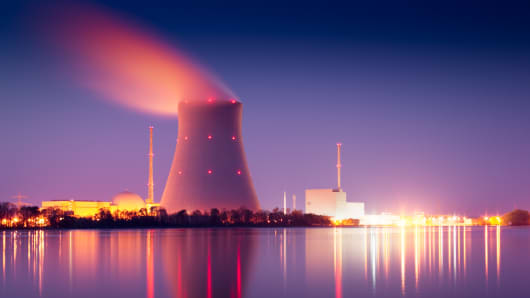
Nuclear power plant.

The fortunes of the battered nuclear power sector may hinge on the development of small- and medium-sized reactors (SMRs), now being heralded by some as industry as the next wave in the industry.

Ten countries, including the United States, are exploring plans to construct SMRs, and that could have broad implications for electricity generation.

As coal plants across the country are decommissioned, an opportunity rises for renewable energy sources, especially natural gas and nuclear power. The U.S. Nuclear Regulatory Commission has given the green light to four SMR-style facilities and is considering one more in the Tennessee Valley.

A new white paper by the Nuclear Energy Institute highlights the opportunity for SMRs, saying that as many as 73 nuclear reactors will be retired within the next 10-20 years.

That could pave the way for more efficient SMRs, which can be a source of both clean energy and economic growth, says Paul Genoa, the institute's senior director of policy development.

"If we develop clean energy technology the world wants, we can transfer that … and build relationships with these developing countries that can last 100 years," Genoa said in an interview. With fears about nuclear power still percolating nearly three years after Japan's disaster at Fukushima, Genoa said the new generation of atomic reactors were designed with those fears in mind.

"Small reactors were designed with Fukushima's lessons learned," he said. In addition to being what he called "environmentally benign," SMRs are built "to completely avoid the kind of meltdown [you get] when you lose offsite power."

But a recent report by the Institute for Energy and Environmental Research cast doubt on the idea that SMRs could help revive the nuclear industry.

The think tank said small reactors "still present enormous financial risks," citing the sector's tendency to overrun on costs. It said the four reactors under construction were in part subsidized by taxpayers. The report said the mass production of SMRs could require $90 billion, and migrating from reactors to smaller modules "is a financial risk shell game, not a reduction in risk."
It's been a rough decade at least for nuclear facilities. Once considered a prominent part of the U.S. energy mix, the sector fell prey to costly facilities and a natural gas boom that chipped away at nuclear power's usefulness in generating power.


At the same time, new environmental regulations are making coal plants less viable. That development makes nuclear industry participants think SMRs could take their place—and even use their existing infrastructure with little additional cost. The Nuclear Energy Institute says that small reactors can be added incrementally as energy demand increases.

BP's annual energy outlook cited nuclear energy output as expected to rise until 2035, with demand from emerging markets accounting for 96 percent of the growth. Part of the reason may be the limitations of renewable energy as an alternative to fossil fuels, said Genoa.


"Renewables are great, but solar generated 0.1 percent of [U.S.] electricity, and 0.5 percent across the globe. It's absolutely inconsequential," he said. "It's growing rapidly and maybe will get up higher, … but we're not going to power New York, Tokyo and Mumbai with solar. It's a pipe dream."

Friday, April 19, 2013

China: CO2 Trading

The following news item , as reported by Reuters, speaks to the trading efficiency that we had discussed recently. Unfortunately, it also makes it clear that the EU plan for Cap  and Trade is in shambles.
*******************************************************************************


The crisis facing the European carbon market will not deter China from plans to establish its own emissions trading platform or its other climate pledges, the senior official responsible for climate change said on Thursday.
Xie Zhenhua, vice-director of the National Development and Reform Commission in charge of climate policies, said efforts to cut greenhouse gas emissions were a "domestic requirement". They were, he said, designed to address longstanding inefficiency and environmental problems, and did not depend on other nations, or on the state of the economy.
"China has pledged these targets to the international community to deal with climate change and they will not change," he said at an event in Beijing. "Even if other countries say they will do nothing, we will keep to our strategy. No matter what happens to our economy, we cannot make any change."
The global financial crisis has saddled Europe's Emissions Trading Scheme (ETS) with a crushing oversupply of carbon credits and record low prices, but the EU parliament this week rejected proposals to bail the market out.
The ETS allows enterprises to meet their carbon reduction targets by purchasing carbon credits from the market, enabling them to keep emitting greenhouse gases. Many credits have been generated by low-carbon projects in China as part of a United Nations scheme known as the Clean Development Mechanism.
China is planning a similar domestic scheme in which carbon-intensive enterprises and industries can meet their own targets by acquiring the emission quotas allocated to other firms.
Xie said China ultimately sought to link its carbon trading platforms with those elsewhere, but was focused now on domestic needs.
"In the future we will establish a link, but in the next few years we first need to establish a carbon market according to Chinese conditions and the conditions of developing countries," he said.
LEARNING FROM EUROPE
He said China would learn from mistakes made in Europe, especially when it comes to prices, with Shanghai set to include a mechanism by which carbon credits can be taken off the market when supplies are too high and prices too low.
Carbon prices on Europe's ETS were trading at an all-time low of 2.46 euros ($3.21) per tonne on Tuesday, down from 18 euros just two years ago. Xie said the problem was that the mandatory emission cuts in Europe had been set too low.
"Why have the prices gone from such a high to such a low? Because of the rate of emissions cuts," he said. "If it was higher, and if there were more pressures, the market would be much more active. It is probably related to the initial design of the exchange and the way emissions targets were allocated."
China is the biggest emitter of greenhouse gases on an aggregate basis, but levels are low in per capita terms.
Xie said China's pilot carbon market scheme was on track, with trading to begin in the southeastern city of Shenzhen in June and later in the business hub of Shanghai before year-end.
But he said China would find it increasingly difficult to meet its 2020 climate change pledges. Problems, he said, would "get harder and harder and the costs will be higher and higher".
China has pledged to reduce 2011 levels of carbon intensity -- the amount of climate-warming carbon dioxide produced per unit of GDP growth -- by 40-45 percent by 2020.
It has also vowed to increase the share of non-fossil fuel energy to 15 percent of its total energy mix by the same period and close vast swathes of inefficient industrial capacity.

Saturday, March 30, 2013

California and Climate Change

IN LOS ANGELES, California’s largest city, the natural world is both far away and close. You spend your days stalled in traffic, cursing your fellow motorists as your car spews out the noxious fumes that, trapped in the Los Angeles basin, blanket the city in smog. When you do get moving, you may find yourself driving through miles of low-rise urban sprawl. Yet, depending on which one of the metropolitan area’s 4,850 square miles (12,600 square kilometres) you are in, you might be half an hour from a clean beach, an hour from a ski run and 90 minutes from empty desert.

Both features of Californian life helped forge the state’s fondness for environmental rule-making. In 1947, four years after a series of smog attacks in Los Angeles, Governor Earl Warren signed America’s first statewide air-protection law. Two decades later a catastrophic oil spill off the Santa Barbara coast helped give birth to the modern environmental movement, leading, among other things, to the California Environmental Quality Act (CEQA), approved by Governor Ronald Reagan in 1970.

Over the decades California’s green rules have inspired other states, and even the federal government, to follow. That urge to blaze trails remains strong. In 2006 Arnold Schwarzenegger, whose passion for climate policy was matched only by his love of Hummers, signed AB32, which required a cut in greenhouse-gas emissions to 1990 levels by 2020. He fought hard for similar federal action. His successor, Jerry Brown, recently urged a meeting of his fellow governors to follow California’s lead.

AB32 has several elements. The most prominent is a cap-and-trade scheme, the world’s second-largest after the EU’s, for substantial emitters of greenhouse gases (mainly large industrial producers). The system, which began on January 1st, will progress through three phases, gradually expanding its reach, lowering the carbon cap and auctioning (not giving away) a growing proportion of emissions permits.

The two auctions so far have gone well. More “non-compliance entities” (financial institutions and the like) are buying allowances, which should lead to a robust secondary market. The California Air Resources Board (CARB), which oversees AB32, has seen off one lawsuit, from the left, which challenged the right of polluters to buy carbon offsets. (A second, from the right, elements of which think all the allowances should be given away, not auctioned, still looms.)

From the beginning CARB has presented its scheme as a model for others. Quebec will join later this year, and there are hopes for other western states. Prospects for federal action look dimmer. A cap-and-trade bill (co-authored by a Californian congressman) died in the Senate in 2009. In February Barack Obama urged Congress to try again. But, as he knows well, a Republican House will not back major new climate laws. For the next two years at least, Mr Obama will have to pursue his aspirations through the Environmental Protection Agency. Still, Mary Nichols, the head of CARB, thinks EPA regulation could make California-style carbon pricing start to look attractive to other states.

Cap-and-trade grabs headlines, but making cars cleaner is perhaps where California’s influence is strongest. In 2002 California passed a law requiring carmakers to slash vehicle emissions. Thirteen states said they would follow suit. Worried about the emerging patchwork of rules, in 2009 manufacturers agreed to higher national fuel-efficiency standards. Using such “bottom-up” tactics to motivate industry, says Daniel Sperling, of the University of California, Davis, has been a deliberate strategy of environmentalists.

If so, they have some work to do on another component of AB32. The low-carbon fuel standard (another Californian first), which says that the “carbon intensity” of transport fuels must fall by 10% by 2020, has the oil industry fuming: Chevron calls it “unworkable”. Yet Oregon and British Columbia have passed similar rules, and Washington state and several north-eastern states may follow.

The final big piece of the jigsaw is renewable energy, which under AB32 must provide one-third of California’s electricity by 2020. On March 13th, announcing plans for two large federal solar projects in the Californian desert, Ken Salazar, the interior secretary, called this “the most robust renewable-energy programme probably in the history of the world” and called for a similar national standard.
California’s high taxes and endless regulations have long earned it a reputation for business-unfriendliness. But today you hear few voices raised against the state’s environmental approach. This may be because residents are particularly concerned about climate change (see chart); since a proposal to suspend AB32 got thumped at the ballot box in 2010, few publicly question the law itself. Another factor is California’s high-tech sector, which leans green.

Such worries as there are focus on implementation or details. Some clean-energy executives, for example, worry that environmental rules change too often and may clash. By far the fiercest debate, however, is over CEQA. For years business groups and some politicians have grumbled that the law makes it far too easy for development projects to be held up by NIMBYs or, worse, business rivals. Horror stories abound; a favourite example of campaigners is the petrol-station owner in San Jose whose expansion plans were stymied when a nearby competitor filed a CEQA lawsuit citing his traffic concerns.

Reformers insist they want to “modernise” CEQA, not ditch it. On March 12th their opponents—unions and NGOs, mainly—rallied in Sacramento, the state capital, to defend the law. The debate is coming to a crunch. Darrell Steinberg, president pro tem of the state Senate, recently issued a proposal for CEQA reform that had the curious feature of apparently upsetting nobody. That will change as the details are filled in; and with the support of Mr Brown, who has described CEQA reform as “the Lord’s work”, campaigners are optimistic they will find satisfaction this year.

CEQA is a law of conservation, designed to protect sensitive habitats from the incursions of modern industrial living. Newer rules, such as AB32, require a different approach: investment, new technologies and development projects. (Some green projects have even fallen victim to CEQA lawsuits.) It is this way of thinking that now thrives in California, and that the state wants to impress upon the world.

(From the Economist.)

Friday, March 15, 2013

Comp-lete Disaster In The Making

Since we will not get a chance to discuss the carbon market in class , the following article should help provide a general view of where we are.

***************************************************************

The world’s only global carbon market is in need of a radical overhaul

WHAT would you say about a market that has helped reduce carbon emissions by a billion tonnes in seven years, attracted $215 billion of green investments to developing countries (more than any private environmental fund) and cut the cost of climate-change mitigation by $3.6 billion? The answer, to judge by a United Nations panel looking into the workings of the Clean Development Mechanism (CDM) is: you’d say it is a shambles.
The CDM was set up under the Kyoto protocol to get developing countries to do their bit to reduce carbon emissions. The mechanism allows projects that reduce greenhouse-gas emissions in poor countries to earn a carbon credit (a “certified emission reduction”, or CER) for each tonne of carbon dioxide avoided. The credits can be sold to firms in rich countries which are obliged under Kyoto to cut their emissions. The idea was to encourage carbon saving where it was cheapest (ie, in developing countries), increasing efficiency.

The trouble is that the supply of credits has far outstripped demand. The one-billionth CER was issued on September 7th. But the largest greenhouse-gas emitters either did not ratify the Kyoto protocol (America) or were not obliged by it to cut emissions (China and India). That has left Europe as the main source of demand for credits, and the CDM has become a sort of annex to Europe’s cap-and-trade scheme, the Emissions Trading System. But the euro crisis has reduced industrial activity (cutting pollution) and European firms were anyway given overly generous carbon quotas under the cap-and-trade scheme. So carbon prices have collapsed, falling from $20 a tonne in August 2008 to below $5 now (see chart).
An oversupply of permits to pollute is an endemic problem. A recent report by Thomson Reuters Point Carbon, an information provider, found that supplies of a different emissions right under the Kyoto protocol, called an “assigned amount unit”, outstripped estimated demand by over a thousand times. (Excess supply is not the only problem the CDM faces, though; the UN panel also calls for a clearer separation between the executive board and the operational secretariat.)
Joan MacNaughton, the vice-chair of the panel, says there is a strong case for having something that links the many regional and national carbon markets that are cropping up, including in Australia, New Zealand, China and, from next year, California. But for the CDM to provide that link, countries will have to reduce their greenhouse-gas emission targets drastically, thus providing a boost to demand. At the moment there is little sign of that happening.