|
|
Bjorn Kindler | Vetta | Getty Images
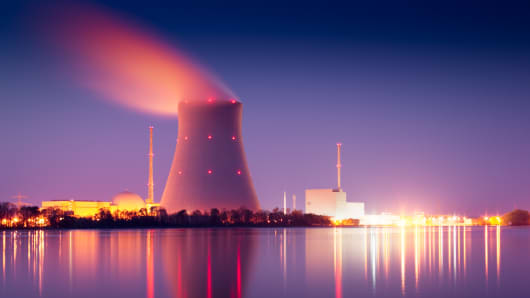
Nuclear power plant.
The fortunes of the battered nuclear power sector may hinge on the development of small- and medium-sized reactors (SMRs), now being heralded by some as industry as the next wave in the industry.
Ten countries, including the United States, are exploring plans to construct SMRs, and that could have broad implications for electricity generation.
As coal plants across the country are decommissioned, an opportunity rises for renewable energy sources, especially natural gas and nuclear power. The U.S. Nuclear Regulatory Commission has given the green light to four SMR-style facilities and is considering one more in the Tennessee Valley.

A new white paper by the Nuclear Energy Institute highlights the opportunity for SMRs, saying that as many as 73 nuclear reactors will be retired within the next 10-20 years.
That could pave the way for more efficient SMRs, which can be a source of both clean energy and economic growth, says Paul Genoa, the institute's senior director of policy development.
"If we develop clean energy technology the world wants, we can transfer that … and build relationships with these developing countries that can last 100 years," Genoa said in an interview. With fears about nuclear power still percolating nearly three years after Japan's disaster at Fukushima, Genoa said the new generation of atomic reactors were designed with those fears in mind.
"Small reactors were designed with Fukushima's lessons learned," he said. In addition to being what he called "environmentally benign," SMRs are built "to completely avoid the kind of meltdown [you get] when you lose offsite power."
But a recent report by the Institute for Energy and Environmental Research cast doubt on the idea that SMRs could help revive the nuclear industry.
The think tank said small reactors "still present enormous financial risks," citing the sector's tendency to overrun on costs. It said the four reactors under construction were in part subsidized by taxpayers. The report said the mass production of SMRs could require $90 billion, and migrating from reactors to smaller modules "is a financial risk shell game, not a reduction in risk."
At the same time, new environmental regulations are making coal plants less viable. That development makes nuclear industry participants think SMRs could take their place—and even use their existing infrastructure with little additional cost. The Nuclear Energy Institute says that small reactors can be added incrementally as energy demand increases.
BP's annual energy outlook cited nuclear energy output as expected to rise until 2035, with demand from emerging markets accounting for 96 percent of the growth. Part of the reason may be the limitations of renewable energy as an alternative to fossil fuels, said Genoa.
"Renewables are great, but solar generated 0.1 percent of [U.S.] electricity, and 0.5 percent across the globe. It's absolutely inconsequential," he said. "It's growing rapidly and maybe will get up higher, … but we're not going to power New York, Tokyo and Mumbai with solar. It's a pipe dream."

2 comments:
I believe the new concept of smaller nuclear facilities will help us offset our greenhouse gas emissions without a doubt but I am still skeptical of the level of danger that these plants will bring to society. Although they may be smaller and we have learned lessons from the Fukushima incident, in what way are these plants designed to completely avoid a meltdown like the Fukushima tragedy? They maybe smaller and less potent but can still cause harm across wide area. Of course when we think of these big and beautiful ideas we run into financial concerns. The idea of using facilities like coal plants to be replaced with these nuclear plants are a good idea it will offset additional environmental degradation and reduce financials by a large amount. It is unfortunate that we cannot figure out a way to utilize renewables more across our globe.
It is a good idea to go promote production of SMRs as it will reduce the emissions of greenhouse gases in our environment significantly. The problem which arises is the funding of these reactors. Until now the taxpayer money has been used to finance the production of SMRs. Further mass production of SMRs would cost $90 billion. Further financing of SMRs should not be done by tax payers money as there are many other more important issues for which it could be used for in America. Hopefully the load of the cost of production is not passed on to the consumers significantly. The only popular and effective environmental friendly sources of energy are Solar and Nuclear but the problem with Solar is that is a "pipe dream" to provide high power consuming cities with electricity.
-Asfand Khan
Post a Comment