Wednesday, February 24, 2010

The Value of Nature?


Kenneth Boulding is reputed to have said that “Economists know the price of everything and the value of nothing”. There is no place where this statement would be more appropriate than in environmental issues. Economics is at the stage where it treats relative market prices as proxies for value. Our aim in this short post is not to challenge whether there ought to be a better measure of value but simply to point out that this metric poses tremendous challenges in environmental economics since so many of the environmental services do not get captured by the market. We have acted for a long time as if these huge environmental costs do not exist simply because we have chosen not to recognize them.

Well, this has changed a bit. Such major externalities lead to inefficient allocation of the resources and so many environmentalists and non environmentalists have been asking that we find ways to value these non-market activities that are usually on the cost side. As a result we have developed many mechanisms such as Contingent Valuation methodology and created property rights ; permit to pollute, that will force corporations to take these external costs into account.

The problem worldwide could be huge. A recent estimate by a study co-sponsored by the United Nations Environmental Programme, UNEP, has shown that if the worlds’ 3000 largest corporations were to account for the environmental damage that ensues from their activities then at least 1/3 of their profits would have to be wiped out. That would amount to over $2.2 trillion. In some cases the value of these negative externalities will more than compensate for all the profits. In a study by the New Economics Foundation it was estimated that the combined profits of Shell and BP for the year 2006 ; $40 billion; would cover just 57% of the damage bill; $70 billion.
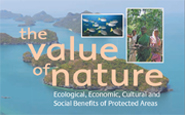


How would we value the marginal ton of carbon that might act as a tipping point to the delicate climate balance? Is it possible that the whole exercise of valuing natural services is a vulgar one?

Monday, February 22, 2010

It Is Not Too Late If We Act Now


It is not very often that we get credible ecological news that is not full of bad news and projections. Well, I am glad to say that the following is a recent study that actually suggests that humans have not lost the race yet. Yes we are on our way towards catastrophic outcomes but we are not there yet and interestingly enough we can avoid the worst outcome if we are smart enough to change our ways and work meaningfully towards redemption.
The Stockholm Resilience Center, at Stockholm University is self described as a center of Research for Governance of Social-Ecological Systems. The Centre released a few months ago a major study undertaken by 28 world renown scientists in which they have established a new area in planetary management. Their first study describes nine planetary boundaries (listed at the bottom of this entry) that they believe humanity must not cross . The study goes on to say that human activity has thus far resulted in breaching three of these boundaries (the stared ones)but not the other six.
We are currently living in the geologic era known as the Holocene which started around 10,000 years ago. As we all know, it was during the Holocene that agriculture was developed, civilization prospered and industrialization became the norm. But unfortunately we are entering the Anthropocene, a new geological age in which human activities have grown as to form a major threat to the health of the earth.
Will we have the wisdom to adopt the right policies and change our behavior so as to avoid catastrophy? Yes we still can do that but time is quickly running out.

The nine Planetary Boundaries:
1 Strategic ozone layer
2 Biodiversity
3 Chemical Dispersion
4 Climate Change ***
5 Ocean Acidification ***
6 Freshwater consumption & the global hydrological cycle
7 Land System Change
8 Nitrogen & Phosphorus inputs to the biosphere & ocean ***
9 Atmospheric aerosol loading
*** Transgressed boundary.