
Kenneth Boulding is reputed to have said that “Economists know the price of everything and the value of nothing”. There is no place where this statement would be more appropriate than in environmental issues. Economics is at the stage where it treats relative market prices as proxies for value. Our aim in this short post is not to challenge whether there ought to be a better measure of value but simply to point out that this metric poses tremendous challenges in environmental economics since so many of the environmental services do not get captured by the market. We have acted for a long time as if these huge environmental costs do not exist simply because we have chosen not to recognize them.
Well, this has changed a bit. Such major externalities lead to inefficient allocation of the resources and so many environmentalists and non environmentalists have been asking that we find ways to value these non-market activities that are usually on the cost side. As a result we have developed many mechanisms such as Contingent Valuation methodology and created property rights ; permit to pollute, that will force corporations to take these external costs into account.
The problem worldwide could be huge. A recent estimate by a study co-sponsored by the United Nations Environmental Programme, UNEP, has shown that if the worlds’ 3000 largest corporations were to account for the environmental damage that ensues from their activities then at least 1/3 of their profits would have to be wiped out. That would amount to over $2.2 trillion. In some cases the value of these negative externalities will more than compensate for all the profits. In a study by the New Economics Foundation it was estimated that the combined profits of Shell and BP for the year 2006 ; $40 billion; would cover just 57% of the damage bill; $70 billion.
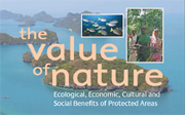
How would we value the marginal ton of carbon that might act as a tipping point to the delicate climate balance? Is it possible that the whole exercise of valuing natural services is a vulgar one?

5 comments:
Ecosystem have value in terms of the conservation of options. Unfortunately, relative to other forms of capital, ecosystems are poorly understood, scarcely monitored, and undergoing rapid degradation and depletion. Often the importance of ecosystem services is widely appreciated only upon their loss. In fact, individuals and societies already assess the value of nature implicitly in their collective decision making, too often treating ecosystem services as "free". Until recently, ecosystem capital was abundant and the impacts of economic activity were minimal. Ecosystem capital is becoming ever scarcer, however, so that this is now critical to understand both how to value ecosystems and the limitations of such valuations.
Society has to value the environment more before we will get real reform in this area. The developed countries need to educate their population on the importance of conservation and this will led to more environmental laws.
Let's face it, all of the pollution that has accumulated on earth can not be cleaned up and removed at the snap of a finger. I agree with Winsome that education and reform with regard to preventing and cleaning up the pollution which exists falls on that of developed countries. The developed countries are those with the resource and technology that enhances the pollution via industry and various oil production techniques. I beleive it is essential that large corportations such as Shell and BP take a stand and help account for the environmental damages which their businesses created on a daily basis. With regard to your average citizen I believe it is also important for countries to education their citizens to conserve and help the environment in small ways each day. For example, conserving water and electricity or recycling, although the tasks seem minute, when taken into consideration by the whole population can add up. Unfortuantely, I do believe that it will take a more devistating event to ensure that everyone (or majority) take part in restoring the quality of the environment.
I agree with Winsome, Society needs to value our environment more or no paradigm will occur in order to save for our future generations. This will not occur over night, nor over one agreement between countries. It will take the involvement of many corporations taking into account externalities to reflect actual price. The system we have come acustom to now puts us at a point where inorder to exceot these externalities in price, we in essence must move backwards in time. Major corporations and the older generations that have most of the decision power are looking to preserve their wealth and status of living as the begin to retire and I dont believe anyone, as humans are based of self interest, would be willing to take such a drastic setback to provide for generations far down the road. I can say fairly confidently that it is impossible to get corporations to agree to take accountability for the negative and positive externalities that currently are unaccounted for just based off the fact of the prisoners dilema. If one company takes it into account their prices rise and all customers move to the cheaper product. If you force this on all companies in a country then they customers most likely move over seas or find substitutes. It seems as if we have created an unstoppable monster that will destroy our ecosystem to the point of diminishing returns where it is no longer profitable for them to produce leaving us, the general population, at close to extinction. This can be seen through the open access idea as we will fish our fisharies until they are close to extinction. This can be translated to us degrading the environment we live in using up our natural resources and eventaully leading to a much smaller population on this planet. This will of course take hundreds to thousands of years, so for now enjoy the cheap prices of products and the benefits of a free mother nature.
We do not value the damage done by our current economic strategy because historically we never have. During the industrial revolution we simply focused on production and growth; the enviroment wasn't even a thought. Decades later, growth, revenue, and output are still our main objectives and the impact on the environment is still on the back burner. The reason this will remain the same for years to come is because as humans, we are against change. We have become so comfortable with our capitalist system and so wrapped up in our selfish ways of living that we do not see the hidden danger inching its way closer with every day that passes. On top of our "if it ain't broke, don't fix it mentality" (in which the "broke" things are being ignored), change is even more frowned upon if it will cost big businesses a lot of their profits. After all, profit is what it's all about; the destruction of our environment is just another means to that end. We will only change when the danger is directly at our doorstep and in plain sight to everyone. Unfortunately, it will be too late. It may be too late as of right now, but we won't know because we wouldn't be willing to change and see how things play out right now anyways.
Post a Comment