Saturday, April 04, 2015

Income from Commons to All.


Comments due by April 12, 2015

(The following is a book review of a rather novel suggestion to collect income from the Commons in the US and proceed to distribute this financial flow to all citizens)
***********************************************************************************************
In the mid-17th century, Gerrard Winstanley led a series of protests in England against “enclosure,” the practice of landlords privatizing public lands. Nonviolent, with a utopian communist agenda, Winstanley’s followers, the Diggers, published pamphlets and, more quixotically, sang their hopes and fears.
A stanza from one of their songs:
“Your houses they pull down, stand up now, stand up now
Your houses they pull down, stand up now.
Your houses they pull down to fright poor men in town,
But the gentry must come down and the poor shall wear the crown.
Stand up now, Diggers all.”
Peter Barnes’s new book, With Liberty and Dividends for All: How to Save Our Middle Class When Jobs Don’t Pay Enough, isn’t as poetic as a Digger tract; yet at its core, it is a book about power relationships as relevant to the 21st century as Digger pamphlets and songs were to the 17th.
What do we do, Barnes asks, when increasing numbers of Americans no longer have jobs that pay enough to generate a modicum of economic security, or when the federal political system seems too paralyzed to do much more than tinker on the margins? What do we do when median wages are unlikely to rebound to pre-2008 levels, while exploitation of common goods by private companies continues to enrich those already perched atop the economic ladder?
The answer: Use the riches of the commons to provide decent living standards for all. Barnes’s inspirations include Thomas Paine’s social insurance schemes of the 18th century, British economist Arthur Pigou’s pioneering work on taxing pollution in the early 20th century, and Francis Townsend’s idea in the 1920s for a universal pension. His modern inspiration is Alaska’s Permanent Fund, which pays residents an annual dividend out of the proceeds from taxes on oil companies that operate in the state. Out of these ideas, he carefully develops a framework for change with the core idea that profits extracted from the commons should be broadly shared. Barnes doesn’t explicitly mention Henry George, but the concept of taxing the unearned increase in the value of land, and then plowing that money back into the common good, is also tacitly present in Barnes’s thinking.
Barnes, the co-founder of Working Assets, a socially responsible financial services group, and the author of five previous books, asks readers to visualize a series of “pipes,” which would generate new revenue streams. These pipes, he calculates, would allow for up to $1.5 trillion per year, generated by developing “rent” mechanisms for private companies’ usage of common assets, to be recycled into the economy via dividends paid to all citizens and legal residents of the United States.
Barnes estimates that upwards of $300 billion could be generated through carbon taxes. More than $350 billion could be brought to the table by taxing financial transactions. Another $300 billion-plus could be made available by charging companies for the use of intellectual property and technological infrastructure seeded with public investments, which they currently use for free. Additional moneys could be raised by charging for use of the electromagnetic spectrum.
Barnes also suggests that the Federal Reserve could create more money—a function it has long utilized during economic contractions. The last few years of quantitative easing have been a partial success, but a lot of that money has sat unused in banks. Barnes thinks the Fed could inject it directly into the economy.
Create the mechanisms to raise funds on this scale, Barnes writes, and the funds will be generated along with the political support.
The proposed $1.5 trillion is roughly the amount that Social Security, Medicare, unemployment, and disability insurance already pay out annually. It’s a huge sum, but Barnes aims to show that the idea is not just fiscally possible but politically feasible. Last year, The Wall Street Journal reported that the 60 largest companies alone had parked more than $166 billion offshore to avoid paying taxes on that income. Large gas and coal companies weren’t paying the costs of their contribution to carbon pollution, but were passing them along to the public as invisible social expenses. Create the mechanisms to raise funds on this scale, Barnes writes, and the funds will be generated along with the political support.Even if $1.5 trillion proves an impossible goal to attain anytime soon, plans that raised several hundred billion dollars to cycle back into the broader economy would have transformative implications.
On one level, it’s a fairly conservative idea. Barnes is not proposing to raise taxes to fund more government. On the contrary, he is proposing new revenue streams to give everyone a social dividend that will offset dwindling wage and salary income. In conservative Alaska, where the Permanent Fund gives an equal share of oil revenue to every man, woman, and child, this highly redistributive idea is phenomenally popular. In some native Alaskan communities, the Permanent Fund provides a significant portion of all cash income. Like the fund, Barnes’s proposed revenue stream, once experienced, would be politically untouchable. Even former Governor Sarah Palin is a strong supporter, and Alaska voters beat back a recent industry-backed campaign to dilute the annual dividend.

Consider every American to own one “share” in America, Barnes asks his readers. And then work out a way to give each shareholder an annual dividend in the profits generated for the country from the usage of the environment and the broader public sphere: Develop cap-and-trade systems so that carbon polluters pay their way; charge for groundwater withdrawals; create financial transaction taxes paid by large financial companies who currently utilize America’s trading and legal infrastructures for free; create profit taxes on oil and mineral extraction; charge large Internet companies rent (or royalties or licensing fees—the terminology is less important than the outcome) for use of the Internet infrastructure and charge phone, television, and radio companies for use of the electromagnetic spectrum.
It’s in these details that this plan morphs from conservative to radical. If Barnes has his way, companies long used to freeloading off of the public—and having that freeloading purchased by well-paid lobbyists and protected by a captive political class—will be faced with far higher bills than they are used to. The more those companies pollute and otherwise wreck the natural environment, the more those bills will increase. Corporations that have effectively engaged in a modern-day Enclosure Movement, privatizing the benefits of large parts of the environment and the economy, will be made to financially compensate the public for the lost access.

Berrett-Koehler Publishers
On the flip side, individuals long used to working for wages that can’t cover all of their needs will find that their families qualify for many thousands of dollars a year in “dividend” income to supplement paychecks of dwindling reliability. Barnes projects that each resident would receive roughly $5,000 per year in dividends—or $20,000 for a family of four—thus locking into place a viable subsidy that would catapult low-income families into something approximating economic security. Don’t think of it as a government giveaway, he argues, in a Digger-like turn; think of it as an empowered citizenry reclaiming essentially looted public property.
A similar system is being developed in Vermont, via a proposed Common Assets Trust, which would raise money from taxes on pollution and other socially harmful practices and pay dividends to each resident while bulking up social investments such as education and public libraries. Several tribal communities across the country have also embraced a form of collective ownership and wealth-sharing. The principle has been institutionalized in California, via utility bill credits, as a part of the state’s effort to encourage utility companies to reduce greenhouse gas pollution. Barnes reports on local government initiatives, such as in Sherman County, Oregon, where a booming wind energy project has generated large tax windfalls that have allowed the county to pay $590 annually to local households.
Overseas, a mixed analogy is sovereign wealth funds. While some of these are run by corrupt regimes and benefit only a privileged few, elsewhere they have been used to shore up vital public services. Norway has taxed oil production and other usages of public resources in order to sock away huge amounts of money for public investments, cash distributions, and the protection of expansive social safety net systems. According to Barnes, Norway’s fund has assets of roughly $1 million per Norwegian. It’s such a large amount that the state has shied away from cash handouts, instead investing heavily in education, job training, health-care services, and the like.
The social dividend becomes, in Barnes’s telling, both a stunningly effective redistributive tool and a way of reining in some of the most anti-environmental business practices. “Linking nature’s well-being to that of our middle class is the key to harmonizing capitalism with nature,” he writes. “If that connection isn’t made, nature’s rent can’t rise very much, and markets will continue to overuse her.”
With Liberty and Dividends for All does a lot in relatively little space. Over the next few years, the Social Dividend concept will enter into the broader conversation about how to craft a new economy—based on environmental and equity ideas too often absent from current growth-model conversations. If the Occupy Movement put the spotlight on economic inequality, Barnes has now defined a particularly creative solution. By itself, Barnes’s proposed Social Dividend won’t change the underlying power dynamics that generate such wealth extremes in the first place. But it does have the potential to transform our comprehension and politics. Such an idea for reform deserves to be taken very seriously. 

Saturday, March 28, 2015

Fossil Fuel Companies are the biggest Threat to Life.


                                                          Comments due by April 5, 2015

“Will we go ahead?” asked Shell CEO, Ben van Beurden, rhetorically, about the oil company’s plans to drill in the Arctic. “Yes if we can. I’d be so disappointed if we wouldn’t.” Van Beurden had the grace to concede that his plans “divide society,” but he seemed unable to comprehend that they might condemn it.
From new research showing that recent sea level rise is “far worse than previously thought”, to updated confirmation of how far we are transgressing our planetary environmental boundaries, an almost daily accumulation of evidence seems unable still to connect van Beurden’s words to their full implication.
What if, instead, he had said to the press conference gathered to hear Shell’s quarterly financial results a few days ago: “We wish to inform you that our business plan is to destabilise permanently the climate on which you, your families and society depend.”
Harsh? Perhaps, but their strategy will end the party for the rest of us, so that their corporate party might continue. In fact, it seems that extreme weather in the form of drought is already breaking hearts in Brazil by forcing cities to cancel carnival, the greatest party of all.
It’s ironic. Those who argue it’s a good idea to respect nature’s various thresholds (like not making farming so toxic that you poison the bees who kindly pollinate our food crops) traditionally get labelled as fun-free spoilsports. But it seems it’s those who recognise no limits at all who represent the greatest threat to life’s party.
While the global industrial exploitation of nature drives a mass extinction event on land and sea, it becomes ever clearer that our own well-being is dependent on the general condition of the environment. Our health, both physiological and psychological, is deeply connected to and relies on the diversity of life.
Now, a new global calculator developed by the Department of Energy and Climate Change, suggests a course of action to prevent irreversible warming that could be as good for the web of life as it is for our quality of life. Radical changes to farming, transport, food and fuel will be needed, but it envisages a world of spreading forest canopies, clean, quiet electric transport and healthy, increasingly vegetarian diets. With such a potential win-win, why would anyone choose bad times with business as usual? The status quo is tenacious.
If you look at the UK’s biggest lobbying groups at the centre of European power in Brussels, their scale seems to be in direct proportion to the damage they do and how likely they are to resist progressive change. Oil, finance and aviation are all in the top five. And, even as the economics of fracking and remote oil exploration, such as in the Arctic, have fallen apart, their lobbies remain persistent and audacious. How else could a Conservative party, which extols the notion of an English person’s home being their castle, be persuaded to promote changes in the trespass law to allow fracking firms to drill beneath homes without the owners’ permission?
Logic, consistency and science become inconvenient to indefensible positions. When the US Senate last month voted on whether climate change was real and caused by human activities it was creating future folklore. Accepting the first, but not the second proposition, the Senate put its debate on a par with the famous, and now seen as absurd, 1925 Scopes ‘Monkey’ case in theUS, which effectively put the theory of evolution on trial.
History is littered with the sorrow of foreknowledge of terrible things about to happen. “We wish to inform you that tomorrow we will be killed with our families,” a line written in a letter by Tutsi pastors in 1994 must be among the saddest words ever written, as they proved correct and became the title of a book on the Rwandan massacres. Like the Holocaust of half a century earlier, there were signposts pointing toward impending atrocity. Yet, a strange disbelief about the possibility of truly extreme action left even informed observers paralysed.
Don’t we now have enough foreknowledge on global warming to call a halt in the face of those who would not only burn all currently known fossil fuel reserves, but search for more?
Knowledge and learning from history are themes in The Edge of Extinction: Travels with Enduring People in Vanishing Lands, by the author Jules Pretty who draws a map of hope from the mountains of China to the Russian steppe and the snows of Canada. He describes an astonishing diversity of human experience in which our species has learned to live well with, rather than against, nature and often each other.
Done intelligently and not dogmatically, we might still make a pleasant and lasting home for everyone on our blue and green planet. But, to make the most of it and keep the party going, we’ll have to stop clinging to dead economic models which wreck our environmental foundations. Because, sadly, for those excited by the possibility of planetary relocation, the nearest known other Earth-like planet is around 13 light years away and would probably take a few hundred thousand years to get to. That’s a long time to wait to get another party started, when you can keep the one you’re already at going strong. (The Guardian)

Sunday, March 22, 2015

A California town decides whether to drill or not?


                                                    Comments due March 29, 2015

— This quaint and quirky seaside community south of Los Angeles has had a conflicted relationship with the oil industry for close to a century. It has variously approved oil drilling, banned it, approved it and prohibited it again. During one yes­on­oil stretch, it contracted with an energy company to put 34 wells on a 1.3­acre city maintenance yard a few blocks from a stretch of beach that normally bustles with surfers and swimmers. On Tuesday, the residents of Hermosa Beach are going to vote yet again on an oil and gas drilling initiative — whether to allow a contract with the energy company E&B Natural Resources Management to proceed despite a current drilling ban. The contract, which could mean hundreds of millions of dollars for the local government, received final approval from the City Council in 1992, but it has been in limbo ever since. A vote to block the drilling would come at an unusual cost: $17.5 million in damages to the energy company, the equivalent of about half the annual general fund budget in this city of almost 20,000 people. There have been voter initiatives to restrict oil drilling, particularly fracking, up and down the California coast, but none seem to have quite the complications and emotions associated with the one here. Across this community on a hillside rising up from the beach, homes are blistering with signs urging a no vote on Measure O, as the drilling initiative is known: “Keep oil out of Hermosa.” All five members of the City Council, including the mayor, have urged voters to defeat it, despite the huge penalty — part of an agreement the city signed with the company to end a lawsuit — and the loss of future oil revenue. “It’s a little more than we probably should have paid,” Mayor Peter Tucker said, referring to the deal for potential damages. “But if it gets us out of this constant, constant oil issue we’ve had hanging over us for 30 years, I think it’s money well spent.” “We are not an oil town,” Mr. Tucker said. “We don’t need the money.” E&B has begun an all­out campaign to persuade voters to approve the initiative, including the kind of television commercials that seem more suited to a governor’s race. (No local cable for this campaign: E&B says it has bought time on Fox News and CNN.) The advertisements, with a backdrop of sun­dappled beaches and comforting music, dispute claims that the project would harm the environment and note that the method of drilling would mean no unsightly oil platforms on the horizon. The wells would drop straight into the ground before turning toward the oil under the ocean. Officials said the project was being jeopardized by unfounded fears in a state that has long been protective of the environment and wary of oil companies. “It’s the California coastline, and that’s always a challenge,” Michael Finch, a vice president with E&B, said. “We suffer from the ‘I don’t want it in my backyard’ syndrome. But you are talking about a 1.3­acre site that would be behind a 35­foot wall.” He said it would be more environmentally sound to drill for the oil here and put it right into the California distribution system than to ship it from across the globe. The campaign has set off fraught neighbor­versus­neighbor debates about the future of this peaceful community, while fueling pointed questions about how the city ended up in such a financially vulnerable position. (City officials noted that the energy company had originally pushed for a much higher penalty for breaking the contract.) An environmental­impact statement commissioned by Hermosa Beach listed nine potential areas of concern that it said the company would be unable to mitigate, including air quality, aesthetics and noise. “Hermosa Beach is a real small beach town,” said Hany Fangary, an environmental lawyer who is a member of the City Council. “We like the feeling of a beach town. If you have someone coming in and putting 34 oil wells right near the beach, it changes the character of the city.” Supporters of the project say the fears voiced by opponents — declining property values, offensive odors and the potential for a spill that could spray fuel into the water, on the beach or over neighboring houses — are exaggerated. “I’m very much in favor of it,” said Jim Sullivan, a commercial real estate broker. “It’s the best thing to come down the road for Hermosa Beach in its entire history.” Concern is driven in no small part by the conspicuous location for the proposed wells: a maintenance yard, now used to store city vehicles, that is in the middle of the city and surrounded by homes and businesses. For months at a time, drill rigs would soar as much as 110 feet, and construction is supposed to take at least three years. This is hardly a community of beachfront mansions. The streets are lined with small (but not inexpensive) homes where people, though able to feel the sweep of Pacific Ocean breezes, do not exactly have privacy: The entire community fills just 1.4 square miles. “We are all kind of crammed in here,” said George Schmeltzer, 76, a former mayor who has lived here for 53 years and is a leader of the opposition. “You can hear your neighbor brush his teeth. We are off­kilter in a pleasant kind of way.” “It’s not an atomic bomb,” he said of the project. “But doggone it, it doesn’t seem right for a residential neighborhood.” The company anticipates that the drilling would produce 35 million barrels over the 34­year life of the project, producing a potential $500 million windfall for Hermosa. (The revenue projection was made when the price of oil was close to $100 a barrel; it is about half that now.) But the more pressing question may be whether to pay $17.5 million to terminate the drilling contract. The initial ban on drilling was passed in 1932, about 13 years after California awarded Hermosa Beach the tidelands with the oil fields. In 1984, with the promise of much­needed revenue for the city, voters approved initiatives granting two exemptions to permit oil drilling. In 1986, the City Council approved the first version of a contract that would be repeatedly amended over the next six years, awarding drilling rights to a company that was a predecessor to E&B. In 1995, voters reinstated the ban on oil drilling, leading the company to sue for damages. After years of litigation, the city in 2012 said it would let drilling begin only if approved by a ballot measure, and agreed to pay E&B the penalty if the initiative was defeated. The city has a surplus of close to $7 million that it has put aside to help pay the penalty. The rest would be paid in roughly $800,000 annual installments. “An $800,000­a­year payment to preserve the quality of life and the special beach community that we have certainly seems worth it,” said Stacey Armato, one of the leaders of the anti­drilling effort. (NYT March3, 2015)

Saturday, March 07, 2015

EXXON settles with NJ over Environmental Damage.


                                      Comments due by March 15, 2015
A long-fought legal battle to recover $8.9 billion in damages from Exxon Mobil Corporation for the contamination and loss of use of more than 1,500 acres of wetlands, marshes, meadows and waters in New Jersey has been quietly settled by the state for around $250 million.
The lawsuits, filed in 2004, had been litigated by the administrations of four New Jersey governors, finally advancing last year to trial. By then, Exxon's liability was no longer in dispute; the only issue was how much it would pay in damages.
The stakes were high, given the enormous cost the state's experts had placed on restoring and replacing the resources damaged by decades of oil refining and other petrochemical operations, as well as of the public's loss of use of the land.
"The scope of the environmental damage resulting from the discharges is as obvious as it is staggering and unprecedented in New Jersey," the administration of Gov. Chris Christie said in a court brief filed in November.
But a month ago, with a State Superior Court judge believed to be close to a decision on damages, the Christie administration twice petitioned the court to hold off on a ruling because settlement talks were underway. Then, last Friday, the state informed the judge that the case had been resolved.
The parties have not announced the deal publicly, and it still must be approved by the judge. But some legal and environmental experts ​who were told about the agreement asked why New Jersey would suddenly settle a case that it had fought strenuously for more than a decade.
Richard B. Stewart, a New York University law professor and a former head of the Justice Department's environmental division, noted the "striking disparity between the damages claimed, which have been exhaustively litigated, and the settlement amount," particularly with a judicial ruling expected soon.
Mr. Stewart said it was hard to assess the agreement without knowing the evidence. But he added, "It raises questions."
The documents that made reference to the settlement, which had not been filed publicly, were obtained after a request by The New York Times. They do not reveal the settlement amount; the figure was provided by two people who were told about it, and who spoke on the condition of anonymity because the deal was not yet public.
A spokesman for Mr. Christie referred questions about the settlement to the attorney general's office. A spokesman for the acting attorney general, John J. Hoffman, said the office had no comment, as was its practice with pending litigation. Exxon also declined to comment.
Peter H. Lehner, executive director of the Natural Resources Defense Council, said that New Jersey, "in the first instance, should be applauded for bringing this and for pursuing it aggressively over the course of four administrations."
Governor Chris Christie
Photographer | CNBC
Governor Chris Christie
"But," Mr. Lehner continued, "some will wonder about the benefits of settling now, rather than after the judge's ruling."
The settlement comes at a time when Mr. Christie, a potential contender for the Republican presidential nomination in 2016, is experiencing the lowest approval ratings of his tenure, and has been forced to defend his decision to reduce state pension payments.
The state chapter of the Sierra Club this week criticized his budget proposal, saying it would hurt environmental protections. Kevin Roberts, a spokesman for Mr. Christie, said on Thursday that the governor stood by his environmental record, and that the Sierra Club had been "reflexively partisan in its criticism of the governor."
A review of state campaign finance databases shows no record of Exxon's making any campaign contribution to Mr. Christie, either through its political action committee or directly, in those years available online. In fact, the records show, Exxon made no contributions of any kind in New Jersey from 2009 to 2013 at the state level.
The damage to the Bayonne and Linden (known as Bayway) sites dated back many years. "Contamination of the land and water at the Bayway and Bayonne refineries began as early as the 1870s in Bayonne and the early 1900s in Bayway and continues to this day," the state's expert report says.
"Today, many of these dredge fill areas still look and smell like petroleum waste dumps," the report continues. "Spilled materials from pipeline ruptures, tank failures or overflows, and explosions have resulted in widespread groundwater, soil and sediment contamination."
The attorney general's office said in its brief in November that the sites had been "adversely affected by or buried under the discharge of hazardous substances," including over 600 identified chemicals.
On the Bayway site, a 2007 court opinion noted, marshland adjacent to a creek was "now mostly covered with a tar of petroleum products or filled with other hazardous constituents and debris." Another 45 acres comprised "sludge lagoons," one-time tidal marshes that had been used as hazardous waste disposal facilities.
The state had set the cost of primary restoration of the sites at $2.6 billion; the state also sought $6.3 billion for what it described as compensatory or "loss of use" damages, intended "to make the public whole."
The damages trial, held before Judge Michael J. Hogan in Mount Holly, N.J., lasted from January through September 2014. The judge was to rule once the closing briefs were filed in November.
Exxon had vigorously contested the lawsuit, and in its brief after the trial said that it had long ago taken responsibility for cleaning up the contamination; that there were "fully functioning" marshes, forests and wildlife on the sites; and that, because they had been closed to the public for years, the state was seeking a windfall "for something the public never lost."
Exxon argued that the state's arguments "ignore the evidence, science and the law" and that no damages should be awarded.
It was unclear when the talks began. A deputy state attorney general, Richard F. Engel, emailed Judge Hogan on Jan. 29, saying the parties were engaged in "serious settlement negotiations" and asking him to "defer the issuance of a decision in this matter."
Two weeks later, Mr. Engel again wrote to the judge, saying "a few critical points" still needed to be resolved and asking that he delay his decision until Feb. 20.
By then, Mr. Engel added, "we are confident that we will have an agreement or our efforts to settle will have ended."
​Then last Friday, Mr. Engel ​wrote to Judge Hogan​, saying the parties had reached a settlement "which is memorialized in a final, agreed upon, consent judgment​."
​Mr. Engel said the agreement would be submitted for public comment in April and would then be submitted for court approval in May, "unless comments received during the public notice and comment period necessitate a change."
If the settlement is approved, Judge Hogan will presumably not release his opinion, and ​whatever damages he would have set will not be made public.
(NYT and CNBC)

Saturday, February 28, 2015

Ecosystem Services

                                                             Comments due by March 8, 2015
By Christian Neumann, Linwood Pendleton, Marianne Kettunen, Tundi Agardy

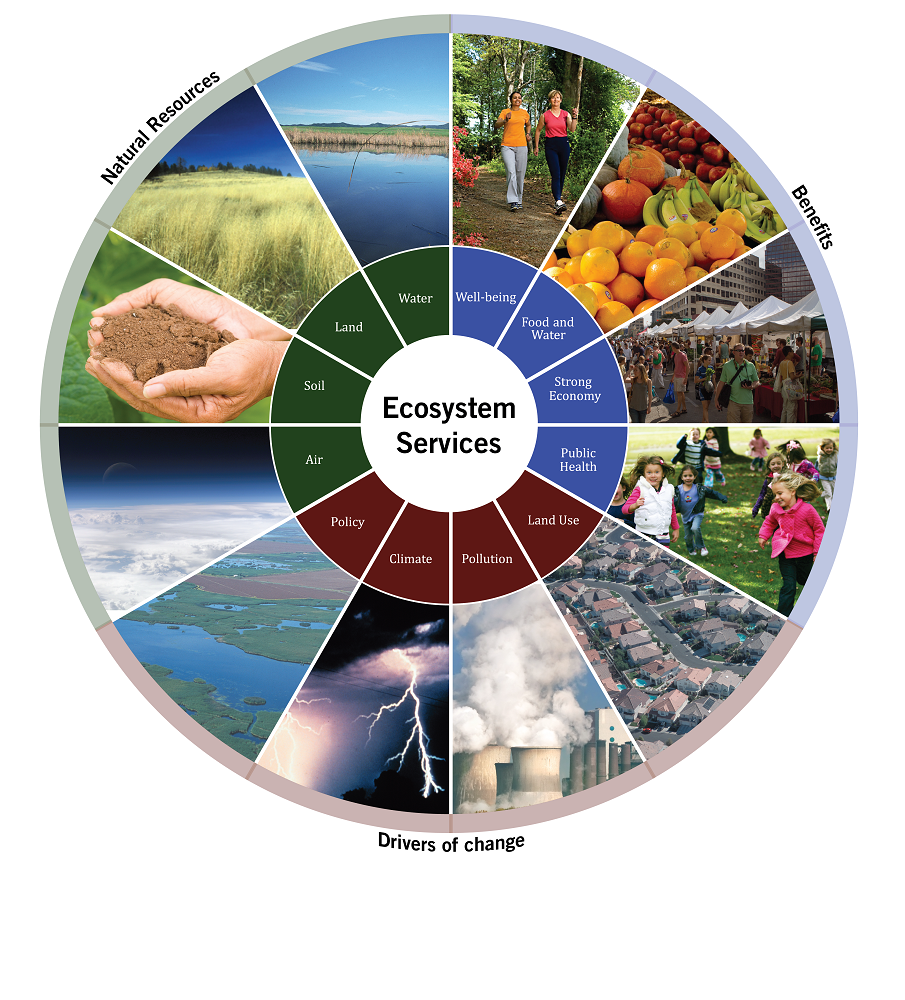
The value of ecosystems and the associated services they provide is receiving growing attention both in the public and decision-making arena. The language of Ecosystem Services essentially translates the complexity of ecological processes and functions into descriptors that define the socio-economic-ecological link. To overcome the challenge of scientific and non-scientific communities having to find a common language, it is worth keeping a few key aspects in mind.  

Talk about the big picture
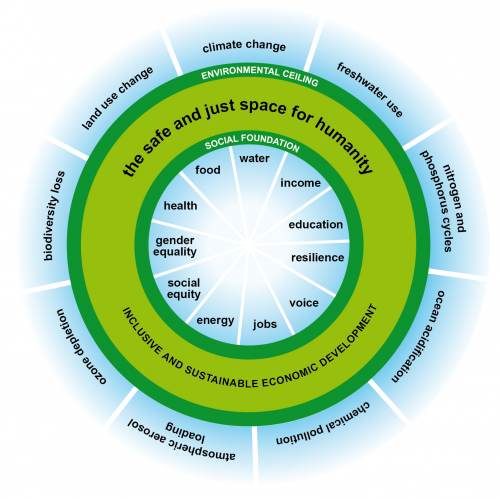
The concept of Ecosystem Services has the potential to reconcile growth of the three pillars of sustainability (social, environmental and economic), often considered to be mutually exclusive: the concept recognises functional ecosystems as a foundation for social and economic development. At the same time, it helps us communicate the link between very direct human needs, such as healthy, clean drinking water, and rather indirect management responses such as securing the quality of upstream ecosystems that provide a water purification function.
The recent scientific advancement of the Ecosystem Services concept and its application in planning and decision-making have added substantial credibility to the understanding of the role that healthy, functioning ecosystems play for human well-being as well as social and economic development. Consequentially, Ecosystem Services have received growing attention from policy-makers as well as the public. However, this increased attention reveals the science to a broader, non-scientific audience, which is a challenge for both communities, as they often don’t speak a common language. 

Know whom you are talking with    
Within the scientific community it is important to maintain the scientific precision essential to advancing scientific understanding. However, in communication with the public, policy- or decision-makers or private sector representatives, it is important to recognise that while people might be familiar with the ecosystem services themselves, they are less so with the related concepts and its specific terminology. Communicating with non-scientific audiences in planning or other decision-making processes, for example through press articles or stakeholder consultation, language used by scientists should reflect the realities and understandings of the interactions of each audience with Ecosystem Services. 
Developing such situation-specific language should be a “co-creative” process, through bi-directional observation and listening. Such an effort will not only lead to a shared language, but in itself further add to the knowledge on local Ecosystem Services and their cultural, social and economic context. Working in a multi- and inter- disciplinarily manner with colleagues from natural, social and cultural sciences will help in both understanding and adapting the Ecosystem Service language to local contexts.
The more relevant Ecosystem Service information becomes for the public, the more careful the scientific community needs to become when balancing linguistic flexibility and scientific precision, in order to be able to convey messages clearly and correctly in layman terms, and to avoid terminology ‘wearing off’ (see for example the term ‘sustainable’).

Different kinds of values and metrics serve different audiences
Assessing the Total Economic Value (TEV) of Ecosystem Services, especially in monetary terms, has played an important role in bringing public attention to the value of nature’s non-market elements. TEV can continue to play such a role in relevant circumstances. In the context of more concrete planning and decision-making situations, however, particularly when informing trade-off decisions, focusing on marginal values of Ecosystem Service change rather than assessing the total values may better respond to audiences’ needs. 
Values and metrics other than economic ones can also be highly relevant to stakeholders and decision-makers, depending on local contexts and the objectives of the processes information is used in. These include, but are not limited to social values (for example safety, livelihoods, health or social cohesion) and cultural values (such as identity, artistic or spiritual values). 
Consequently, it is important to understand the target audience, their association with ecosystem services and their information needs when designing and implementing assessments and valuations. Messages should be thoughtfully crafted and communicated to convey the results of these assessments. 

Credibility matters
Ecosystem Services can be used to support arguments for specific, already existing objectives such as the conservation of a certain area, ecosystem or habitat. To avoid undermining scientific credibility, it is important to reveal such objectives when communicating about Ecosystem Services. Similarly, care should be taken to not ‘oversell’ claims about benefits associated with Ecosystem Services (for example coastal protection from extreme weather events), to avoid later disenchantment of stakeholders and policy- and decision-makers. Further, the usefulness of arguments for conservation based on Ecosystem Services might not work equally well in all circumstances (e.g. conservation of coastal vs. marine habitats). 
Ecosystem Services as a concept is necessarily a reduction of complexity – a fine balance needs to be struck to communicate complexity without losing relevance and tangibility. 

The language of Ecosystem Services creates new connections
When carefully applied in a relatable manner, the concept of Ecosystem Services has the power to bring together decision-makers and scientists from different disciplines. In turn, the resulting exchanges serve to further support the concept itself, as relationships are built and mutual understanding is developed. 
By connecting people and ecosystems, the concept of Ecosystem Services can support the reconcilement of environmental protection and sustainable use with social and economic development – if we speak a language everyone can understand.

Saturday, February 21, 2015

Decommissoning Rigs in the North Sea


                                                   Comments due by Feb. 28, 2015

 By STANLEY REED LONDON — Cleaning up an oil field in a forbidding environment like the North Sea may be almost as formidable a task as developing one, and in the coming years, those waters are likely to serve as a laboratory for what happens when the useful lives of oil fields expire. Royal Dutch Shell is beginning to decommission and dismantle its installations in the Brent field, which has produced nearly 10 percent of all the oil and gas extracted from British waters and gave its name to the most important globally traded blend of crude. Twenty years ago, Brent, which lies under more than 400 feet of water between the Shetland Islands, off Scotland, and Norway, was the scene of a landmark battle between the environmental movement and the oil industry over a relatively minor dismantling job. Greenpeace, the activist group, succeeded in deterring Royal Dutch Shell from disposing of a mammoth storage buoy called the Brent Spar in the depths of the ocean through stunts like landing a protester on the installation with a helicopter.Now, after nearly 40 years of production that yielded about 30 billion pounds, or about $46 billion, in revenue, two­ thirds of it going to taxes, Shell has filed proposals to start taking apart one of the field’s four platforms, called the Brent Delta. “One wonders if future generations will see this as one of the events marking the beginning of the end of the fossil fuel era,” said Anthony Hobley, chief executive of Carbon­Tracker, a London­based organization that advises investors on the risk of fossil fuel investments. Shell estimates that cleaning up the whole field, which has four platforms, will require a decade and cost billions of pounds. Certainly the process will be closely watched, not least because Brent will be the largest North Sea field to be decommissioned so far. With many of the sea’s fields in decline and running at meager profit levels, or even losses, after the recent sharp fall in oil prices, other operators are facing the same gargantuan task now confronting Shell. The decommissioning will mark the beginning of an expensive sunset phase. “No one quite knows the full extent of the cost of decommissioning,” said Malcolm Dickson, an analyst at Wood Mackenzie, an industry consulting firm based in Edinburgh. Estimates of the costs keep going up year after year because “companies have not grasped the extent that could be involved,” he said. Wood Mackenzie forecasts that the oil industry will spend £15 billion over the next decade on decommissioning in Britain, and that by the early 2020s, annual costs for dismantling fields may exceed new investment. As recently as 2013, the industry spent about £900 million on decommissioning while investing more than £14 billion in British waters. The sheer scale of the task that Shell is facing on Brent gives an inkling of the complexity and potential risks. Earlier this month, Shell filed plans with the British government to remove the portion of the Brent Delta platform that includes the housing for crew members and heavy­duty work areas. A giant, specially built ship will lift off this top section, a structure that weighs 23,500 tons, and carry it to shore to be cut into pieces and largely recycled. Shell also plans to take apart two other Brent platforms called Alpha and Bravo, which ceased production at the end of last year. Production at the Delta platform, which is more than 100 miles from shore, ceased in 2011, and workers have already begun to dismantle it. What’s likely to be particularly expensive and difficult to assess beforehand is dealing with the massive support pillars, pipelines and other apparatus that are underwater. The North Sea is like a spaghetti bowl whose rim is laced with pipelines and other equipment. Brent, for instance, has 28 pipelines and 140 wells that will need to have their well heads and other equipment removed before being plugged. Each platform is anchored to a concrete base that weighs almost as much as the Empire State Building in Manhattan, according to Shell. “Everyone thinks about the topsides and what is visible above the waves,” said Duncan Manning, Shell’s business opportunity manager for the Brent project, “but what actually takes the time is plugging and making safe the wells.” Because of the costs and the unknowns, operators try to keep oil fields going even if they are running at a loss. In the 1990s, Shell and co­owner Exxon Mobil spent big money refashioning Brent, which had been a key oil producer, into a natural gas field. Mr. Manning said that before deciding on decommissioning Brent, the company also considered other possible uses for its structures there, like wind farms or the emission reduction technique known as carbon capture and storage. Other operators seem likely to face similar problems. Over the next decade, for instance, more than 900 wells in British waters, nearly 20 percent of the total, are expected to be taken offline at a total cost of £6.4 billion, or about £7 million per well, according to Oil & Gas UK, an industry group. The organization estimates that decommissioning will cost nearly £40 billion through 2040. A large part of the cost will probably be funded by the British taxpayer. Greenpeace may take a certain satisfaction in the plans that have been revealed by Shell, which is based in The Hague. The company is following a treaty called the Oslo/Paris Convention that was signed by northern European countries in the years after the Brent Spar fight. “Shell has agreed to take onshore the topside, which is actually just complying with international law,” said Doug Parr, policy director for Greenpeace UK. Shell says it is applying the lessons taught by the Brent Spar episode. “We did not consult widely enough when we decommissioned the spar 20 years ago,” Mr. Manning said. This time, he said, Shell has spent eight years consulting a wide range of groups, and its proposals reflect their input. Shell wants to leave large pieces of equipment on the sea bottom. The company acknowledges that a half­century ago, when Brent was developed, “decommissioning did not feature highly in the design considerations.” Mr. Parr conceded that it may make more sense to leave giant pieces of concrete in place than further disturb the environment by moving them. Mr. Parr said his group was waiting to see what Shell actually does. “Engaging with us is different from taking notice,” he said. “Let’s see how things develop on that front.”

Friday, February 13, 2015

Plastic In the Ocean

                                              Comments due by Feb. 21, 2015
Marine scientists have long known that plastic pollution in the ocean is a huge problem. The most visible sign of it is the Great Pacific Garbage Patch, an accumulation of waste (actually spanning several distinct patches) floating in the ocean. It’s at least twice the size of Texas and can be seen from space. This pollution has an incalculably lethal effect on everything from plankton to whales.
So just how much plastic is there? A new study in Science yesterday put out some pretty horrifying numbers: In 2010, the study finds, between 4.8 and 12.7 million metric tons (that’s about 10.5 billion to 28 billion pounds) of plastic entered the oceans — the median of those estimates is 1.3 times the weight of the Great Pyramid at Giza.
If we want to crack down on all that plastic, knowing where it all comes from could be as important as knowing how much there is. That’s the main idea behind this study. A team of scientists led by University of Georgia environmental engineer Jenna Jambeck set out to calculate how much plastic every one of the world’s 192 coastal countries dumps into the ocean. To do it, they combined data on each country’s per-capita waste generation, the size of the population living within 50 kilometers of the ocean, the percentage of waste that is plastic, and the percentage of plastic waste that is “mismanaged” (defined as “either littered or inadequately disposed”).
The last step is to estimate how much of the mismanaged coastal plastic waste actually washes into the sea. (This is the step that explains the wide uncertainty range in the grand totals above.) Jambeck drew on existing literature on waste streams from places like South Africa and the Bay Area to reach an estimate of 15-40 percent; she then applied that range across the board.
The chart below shows the worst offenders, in terms of total plastic pollution in the ocean in 2010, using data from the study. The top-ranks belong to middle-income countries with rapidly growing coastal populations that lack the resources to keep pace with waste management infrastructure. By contrast, even though the United States has relatively good waste management, its per-capita waste production is so high that it makes the top 20.
plastic-ranking_1
Tim McDonnell
That’s right: China alone dumped nearly 5 billion pounds of plastic waste into the ocean in 2010. But what’s even worse is just how much the study projects these numbers will grow in the future, based on predictions of population growth in each country by 2025. The chart below shows the top-ranked countries in terms of total mismanaged plastic waste (in other words, not all of this plastic is necessarily winding up in the ocean). China is still very much in the lead, and India shows a disturbing explosion of plastic pollution:
ocean-plastic-chart-2
Tim McDonnell


Friday, February 06, 2015

BP & Shell will consider the cost of climate change.

                                    Comments due by Feb. 14, 2015
BP will support a shareholder resolution calling on the company to release information about how climate change could affect its business. It’s the second big win for climate-conscious investors this year: Shell agreed to support a similar resolution last week.
Both the Shell and BP resolutions were submitted by a coalition of activist investor groups representing more than 150 major shareholders in Europe and America, including the U.K.’s Environment Agency and the Church of England, for a combined $300 billion in assets.
The resolution asked Shell and BP to reduce emissions, to invest in renewables, to provide transparency about bonuses that reward “climate-harming activities,” and to test how their business models would hold up if governments were to take action to limit global warming to 2 degrees Celsius. These steps are good business, the resolution argues, “given the recognised risks and opportunities associated with climate change.”
Analyses suggest that in order to stay below the 2 degree level, much of the fossil fuel in the ground will have to stay there — including all of the oil remaining in the Arctic, which both Shell and BP are hoping to tap. If governments take more stringent action to confront climate change, these resources could end up stranded, despite the high value oil companies place on them. That’s led some, like U.N. climate chief Christiana Figueres, to suggest that investors in extractive industries should worry about a “carbon bubble.”
“Climate change is a major business risk,” said James Thornton, CEO of ClientEarth, one of the investor groups behind the push, when the resolutions were filed last month. “BP and Shell hold our financial and environmental future in their hands. They must do more to face the risks of climate change. Investors can help them by voting for these shareholder resolutions.”
JJ Traynor, Shell’s executive vice president of investor relations, sent a letter on Jan. 29 to shareholders in the company urging them to support the resolution. And yesterday, Reuters reported that a spokesperson for BP said his company would also support the resolution. “We consider the resolution to be non-confrontational, and it gives us the opportunity to demonstrate our current actions and build on our existing disclosures in this area,” the spokesperson said in an email.
Elspeth Owens, a representative of ClientEarth, called BP’s decision “great news” and said that the victory “confirms the potential of shareholder engagement.”
Both oil companies rank among the largest, by revenue, in the world. Investor activists withdrew a similar resolution filed with ExxonMobil last year after the company agreed to publish publicly a report on how future regulations, like carbon pricing, could affect its bottom line. (If you’re curious, ExxonMobil more or less said regulations won’t affect that bottom line much at all, really, because regulations aren’t actually coming. Ben Adler summarized the company’s position thusly: “Governments will allow us to keep extracting and burning fossil fuels because the economy.”)
As for BP and Shell, both resolutions still have to be voted on by their shareholders. BP will recommend that its investors support the resolution at a meeting on April 16. Shell, meanwhile, is encouraging shareholders to vote for the resolution at its annual general meeting in May.

Saturday, January 31, 2015

The Rise and Fall of Ecological Economics

                                              Comments due by February 7, 2015
The following is a summary of a much longer article by Mark Sagoff.
The early 1980s were a period of crisis and change for the environmental movement. President Ronald Reagan had swept to power by campaigning against "environmental extremists" who he said favored "rabbits' holes" and "birds' nests" over jobs and economic growth. In office, Reagan filled his cabinet with anti-environmentalists and subjected environmental regulations to cost-benefit tests.

Greens were challenged intellectually as well as politically. In 1981, a 48 year-old Indian economist named Amartya Sen published a ground-breaking book showing that famines occur not because of failures of production but failures of distribution due to things like poverty, war, and political oppression. Sen's work, for which he eventually won the Nobel Prize, combined with the fact that per capita food consumption rose through the 1970s, discredited the Malthusianism that had been promoted by prominent ecologists such as Stanford University's Paul Ehrlich.

A new scientific case for environmental action was needed, and a new discipline -- ecological economics -- emerged to fill the role. Over the next 30 years, the concepts of ecological collapse, tipping points, and putting a price on nature would fleck the discourse of global political elites in the halls of McKinsey, Davos, and the U.N. Popular figures such as Thomas Friedman, Al Gore, Amory Lovins, Paul Hawken, and Bill McKibben would draw on concepts developed by the ecological economists Herman Daly and Robert Costanza to claim that economic growth undermines the planet's capacity to support human civilization.

In a sweeping new history of the era written for the Breakthrough Journal, the esteemed environmental philosopher Mark Sagoff writes:


Ecological economists distinguished themselves from neo-Malthusian catastrophists by switching the emphasis from resources to systems. The concern was no longer centered on running out of food, minerals, or energy. Instead, ecological economists drew attention to what they identified as ecological thresholds. The problem lay in overloading systems and causing them to collapse.


But outside the limelight, working ecologists were rejecting the idea of nature as closed, rule-bound "systems" existing in varying states of equilibria. "There is no dynamic order, force, or principle of self-organization that makes every hodgepodge a system," writes Sagoff. Species come and go, and the "systems," "progressions," and "equilibria" are mental constructs. Empirically-oriented ecologists returned to the work of scientists like Henry Gleason who in 1917 described "each association of plants and animals as unique, ephemeral, spontaneous, idiosyncratic, extemporaneous, and a law unto itself."

The radical ambitions of ecological economists to subject the economy to the laws of nature diminished greatly. Many joined the prosaic efforts of neoclassical economists to price ecosystem services; Costanza put the total value of the earth's ecosystems at $33 trillion.

"The Rise and Fall of Ecological Economics" is a cautionary tale. "If environmental decisions are fundamentally framed as questions of economic welfare," Sagoff concludes, "public officials and the public itself will opt nearly every time for whatever policy promises more economic growth, more production, and more jobs." In their obsession to model and monetize nature, ecologists and environmentalists lost their way. Says Sagoff, a former Pew Scholar in Conservation and the Environment:
The scientistic and self-referential controversies in which ecological economists engage drain away the moral power that once sustained environmentalism. This moral power may return if environmentalists employ science not to prescribe goals to society but to help society to achieve goals it already has.